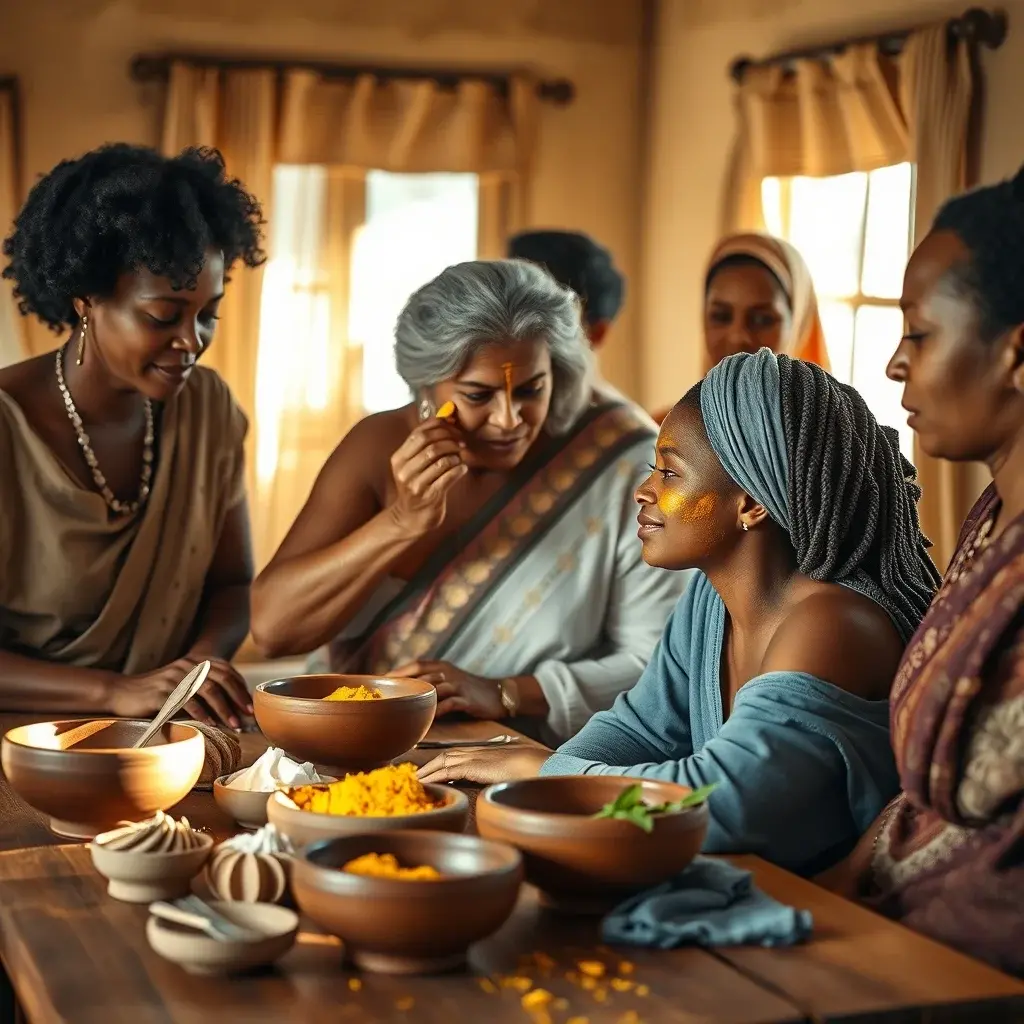
Generational skin wisdom, particularly practices centered on melanin-rich complexions, has emerged as a defining force in global beauty culture, intersecting dermatological science, cultural identity, and commercial innovation. This phenomenon reflects a growing movement among individuals of African, Indigenous, Latin American, and South Asian descent to reclaim and modernize ancestral skincare rituals. The trend gained momentum in the late 2010s, coinciding with the natural beauty movement and the rise of social media platforms like Instagram and TikTok, where creators began documenting traditional remedies and their efficacy. Today, these practices are not only preserved in households but also commercialized by brands, studied by researchers, and debated by policymakers over issues of cultural appropriation, efficacy, and accessibility.
Defining the Scope: Historical Roots and Key Stakeholders
Generational skin wisdom encompasses a diverse array of practices, from the use of shea butter in West Africa to turmeric-based ubtans in South Asia and Indigenous Australian bush medicines. These rituals are deeply embedded in cultural narratives, often passed down through oral traditions, and serve as markers of identity, resilience, and community. The primary stakeholders include:
- Cultural Practitioners: Elders, healers, and community leaders who preserve and transmit these traditions.
- Dermatologists and Researchers: Scientists studying the biochemical properties of traditional ingredients and their potential applications in modern skincare.
- Beauty Brands: Companies, both heritage-focused and mainstream, that commercialize these practices, sometimes under scrutiny for ethical sourcing and cultural representation.
- Consumers: Individuals who adopt these practices for personal care, often seeking to reconnect with their cultural heritage or address specific dermatological needs.
- Policymakers and Advocates: Organizations addressing issues of cultural appropriation, biodiversity conservation, and equitable access to traditional knowledge.
The resurgence of these practices is not merely a nostalgic revival but a response to gaps in the mainstream beauty industry, which has historically marginalized melanin-rich skin in product development and marketing. A 2021 study by the Journal of Clinical and Aesthetic Dermatology found that 65% of women of color reported dissatisfaction with the availability of skincare products tailored to their needs, citing issues like hyperpigmentation, dryness, and sensitivity. This dissatisfaction has fueled demand for heritage-inspired solutions.
Chronological Evolution: From Ancestral Knowledge to Modern Markets
The trajectory of generational skin wisdom can be divided into distinct phases, each shaped by historical, social, and economic forces:
- Pre-Colonial Era (Pre-15th Century):
- Indigenous communities across Africa, the Americas, and Asia developed localized skincare rituals using native plants, clays, and oils. These practices were integral to spiritual, medicinal, and social customs.
- Examples include the use of marula oil by the San people of Southern Africa, aloe vera in ancient Egypt, and neem in Ayurvedic traditions.
- Colonial Disruption (15th–20th Century):
- Colonialism disrupted the transmission of these practices, as Western beauty standards were imposed, and traditional knowledge was often dismissed as “primitive.”
- Despite this, many communities preserved their rituals in secret, adapting them to limited resources.
- Post-Colonial Revival (1960s–1990s):
- Civil rights movements and decolonization efforts sparked a renewed interest in cultural heritage, including skincare practices.
- Brands like Palmer’s and SheaMoisture began commercializing traditional ingredients, though often without direct community involvement.
- Digital Age and Globalization (2000s–Present):
- The rise of social media democratized access to traditional knowledge, allowing creators to share tutorials and testimonials.
- A 2022 report by McKinsey & Company noted that the global market for heritage-inspired beauty products grew by 12% annually between 2018 and 2022, outpacing the broader beauty industry.
- Controversies over cultural appropriation emerged, with brands like Tarte Cosmetics and Kylie Skin facing backlash for commodifying traditional ingredients without crediting or compensating source communities.
Operational Mechanics: How Traditional Ingredients Work
The efficacy of generational skin wisdom is increasingly validated by scientific research, which identifies bioactive compounds in traditional ingredients that address melanin-rich skin concerns. Below is a comparison of key ingredients, their cultural origins, and their dermatological benefits:
| Ingredient | Cultural Origin | Key Compounds | Dermatological Benefits |
|---|---|---|---|
| Shea Butter | West Africa | Triterpenes, Vitamin E, Oleic Acid | Moisturization, anti-inflammatory, scar reduction |
| Turmeric | South Asia | Curcumin | Antioxidant, anti-acne, hyperpigmentation treatment |
| Marula Oil | Southern Africa | Omega-6, Omega-9, Vitamin C | Barrier repair, anti-aging, UV protection |
| Neem | India | Nimbidin, Gedunin | Antibacterial, antifungal, eczema relief |
| Cupuacu Butter | Amazon Basin | Theobromine, Phytosterols | Deep hydration, elasticity restoration |
Dr. Heather Woolery-Lloyd, a dermatologist and director of the Skin of Color Division at the University of Miami, explains, “Many traditional ingredients contain compounds that modern science is only beginning to understand. For example, the high oleic acid content in shea butter makes it uniquely effective for repairing the skin barrier in melanin-rich skin, which is more prone to transepidermal water loss.”
However, the commercialization of these ingredients has raised concerns about sustainability and ethical sourcing. A 2020 report by the FairWild Foundation found that 70% of wild-harvested botanicals used in the beauty industry were at risk of overharvesting, threatening biodiversity and the livelihoods of Indigenous communities. This has led to calls for stricter regulations and fair-trade certifications.
Quantitative Data: Market Trends and Consumer Behavior
The economic impact of generational skin wisdom is substantial, with the global market for heritage-inspired beauty projected to reach $15.6 billion by 2027, according to a report by Grand View Research. Key data points include:
- Consumer Demographics: A 2023 survey by NielsenIQ found that 68% of Black consumers and 54% of Hispanic consumers in the U.S. actively seek out heritage-inspired skincare products, compared to 32% of white consumers.
- Brand Performance: Heritage-focused brands like Fenty Skin, Briogeo, and Mielle Organics have seen revenue growth exceeding 30% year-over-year, driven by demand for melanin-friendly formulations.
- Social Media Influence: Hashtags like #MelaninPoppin and #BlackGirlSkincare have amassed over 2 billion views on TikTok, with tutorials on traditional remedies like turmeric masks and black soap gaining millions of engagements.
- Research Funding: The National Institutes of Health (NIH) allocated $12 million in 2022 to study the dermatological benefits of traditional ingredients, a 40% increase from 2018.
Despite this growth, disparities persist. A 2021 study by Essence magazine revealed that 45% of Black-owned beauty brands reported difficulty securing retail distribution, compared to 22% of non-Black-owned brands. This has led to calls for greater investment in minority-owned businesses and equitable shelf space in major retailers.
Systemic Impacts: Cultural, Economic, and Social Dimensions
The resurgence of generational skin wisdom has far-reaching implications beyond the beauty industry. Culturally, it represents a form of resistance against Eurocentric beauty standards, which have historically marginalized melanin-rich complexions. Dr. Yaba Blay, a scholar of Black racial identity, notes, “For many people of color, adopting these practices is an act of reclamation. It’s about asserting that our beauty traditions are not only valid but superior in addressing our unique needs.”
Economically, the trend has created opportunities for Indigenous communities to monetize their knowledge. For example, the Kalahari Melon Oil Cooperative in Namibia, which produces oil from wild-harvested melons, has provided employment for over 500 women and generated $1.2 million in annual revenue. However, challenges remain in ensuring that profits are equitably distributed and that communities retain control over their intellectual property.
Socially, the movement has sparked conversations about cultural appropriation and the ethics of commercialization. In 2021, the Navajo Nation filed a lawsuit against Urban Outfitters for selling products labeled as “Navajo” without permission, highlighting the need for legal protections for traditional knowledge. Similarly, the African Intellectual Property Organization has advocated for international treaties to prevent the unauthorized use of Indigenous botanicals.
Stakeholder Perspectives: Conflicts and Collaborations
The generational skin wisdom movement is characterized by diverse and sometimes conflicting perspectives among stakeholders:
- Cultural Practitioners:
Many elders and healers view the commercialization of their traditions with ambivalence. While some welcome the recognition, others express concern about dilution and exploitation. Mama Zogbé, a traditional healer from Côte d’Ivoire, states, “Our ancestors did not pass down these rituals for corporations to profit. They were sacred, not products.”
- Dermatologists:
Medical professionals are divided on the efficacy of traditional remedies. While some, like Dr. Woolery-Lloyd, advocate for integrating evidence-based traditional ingredients into modern skincare, others caution against unregulated use. Dr. Jeanine Downie, a dermatologist in New Jersey, warns, “Not all traditional ingredients are safe or effective. Some can cause irritation or allergic reactions, especially when used without proper formulation.”
- Beauty Brands:
Companies are navigating the tension between authenticity and profitability. Some, like SheaMoisture, have faced backlash for shifting their marketing away from their heritage roots to appeal to a broader audience. Others, like Mielle Organics, have prioritized community engagement, partnering with Black farmers and investing in education initiatives.
- Policymakers:
Governments and international bodies are grappling with how to regulate the industry. The World Intellectual Property Organization (WIPO) has proposed frameworks for protecting traditional knowledge, but implementation remains inconsistent. In 2022, the African Union adopted a resolution calling for member states to develop laws safeguarding Indigenous botanicals, though progress has been slow.
- Consumers:
For many consumers, these practices are deeply personal. A 2023 survey by Refinery29 found that 72% of Black women in the U.S. view their skincare routines as a form of self-care and cultural expression. However, affordability remains a barrier, with 40% reporting that heritage-inspired products are often priced out of reach.
The future of generational skin wisdom hinges on balancing innovation with respect for cultural heritage. Upcoming regulatory milestones, such as the European Union’s Deforestation Regulation, which will require companies to prove that their botanicals are sustainably sourced, could reshape the industry. Additionally, the growing influence of Gen Z consumers, who prioritize ethical and inclusive brands, may accelerate shifts in corporate behavior. As research into traditional ingredients expands, collaborations between scientists, cultural practitioners, and brands could unlock new possibilities for melanin-centric skincare. Yet, the movement’s long-term sustainability will depend on whether it can preserve its soul amid commercial pressures, ensuring that the wisdom of the past continues to empower future generations.
You may also like
-
The Comprehensive Dynamics of Melanin Ritual Skincare: Science, Routines, and Equity for Medium to Dark Skin Tones in 2025
-
The Comprehensive Framework for Melanin-Conscious Skincare: Evidence-Based Strategies for Hyperpigmentation, Brightening, and Barrier Resilience
-
The Global Resurgence of Ancestral Melanin Care: Tradition, Science, and Identity in Contemporary Skincare
-
The Essential Components of Melanin Ritual Skincare: A 2025 Breakdown of Dark Skin Radiance, Formulation Science, and Dermatological Precision for Rich Complexions
-
Sustainable Fashion: How the Industry is Shifting Toward Ethical and Eco-Friendly Practices