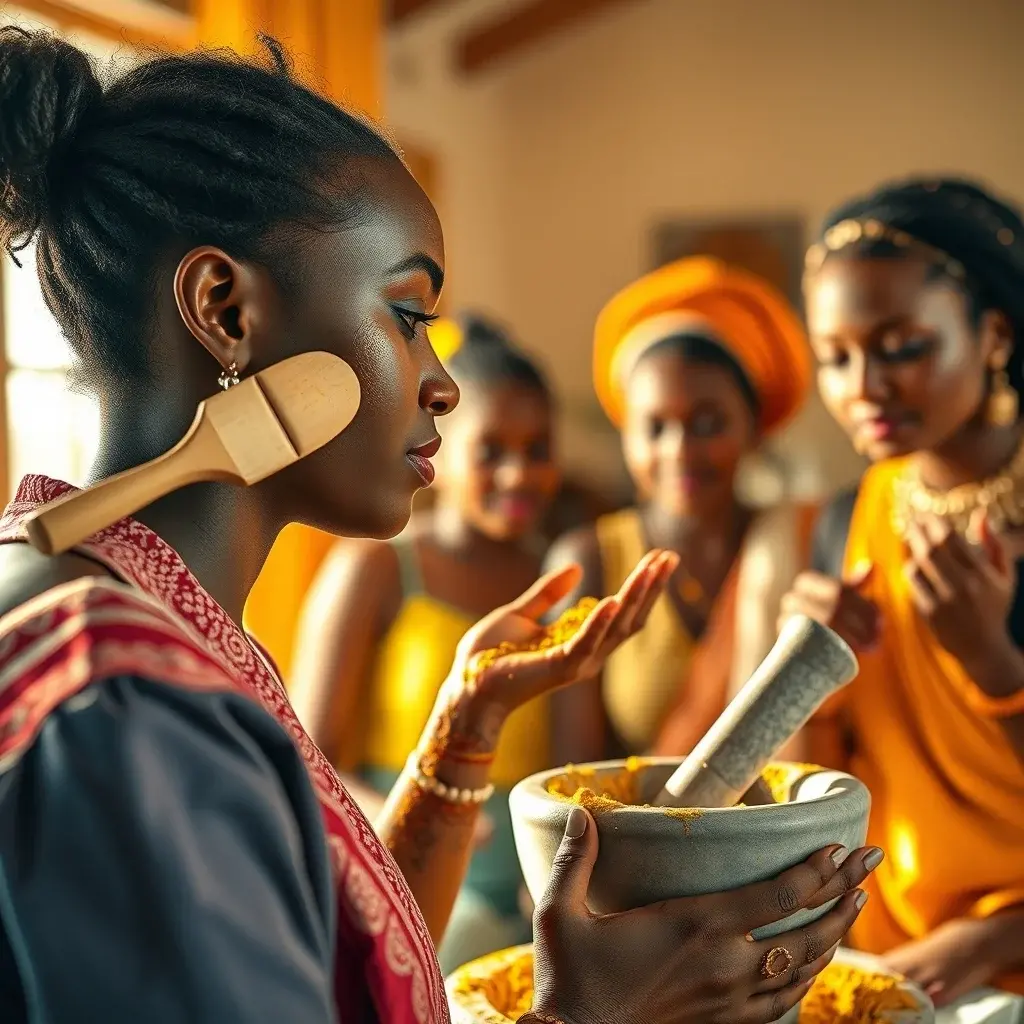
In 2024, the global skincare industry is witnessing a transformative shift as melanin-centric rituals, rooted in centuries-old traditions, gain unprecedented visibility and commercial traction. This movement, driven by a confluence of cultural reclamation, scientific validation, and market demand, involves communities across Africa, the Caribbean, South Asia, and the African diaspora. The resurgence of these practices is not merely a trend but a deliberate effort to center melanin-rich skin in beauty narratives, challenging Eurocentric standards that have long dominated the industry. Stakeholders range from indigenous knowledge keepers and dermatologists to multinational corporations and grassroots activists, each playing a distinct role in shaping the trajectory of this phenomenon.
The current landscape is defined by three key dynamics: the digitization of ancestral knowledge, the commercialization of heritage ingredients, and the politicization of melanin representation. Social media platforms, particularly TikTok and Instagram, have become hubs for sharing generational skincare wisdom, with hashtags like #MelaninMagic and #AncestralGlow amassing over 2.3 billion views collectively. Simultaneously, the global market for melanin-affirming skincare products is projected to reach $12.8 billion by 2027, growing at a compound annual rate of 8.5%, according to a 2023 report by Grand View Research. This growth is fueled by consumer demand for products that address hyperpigmentation, hydration, and sun protection tailored to darker skin tones, areas historically neglected by mainstream brands.
The Historical Foundations of Melanin-Centric Skincare
Melanin-centric skincare rituals are not a modern invention but a continuation of practices that date back millennia. Archaeological evidence from ancient Egypt, for instance, reveals the use of kohl, shea butter, and black seed oil in beauty regimens as early as 3000 BCE. These ingredients were not only cosmetic but also held spiritual and medicinal significance. Similarly, in West Africa, the Yoruba people employed osun (camwood) and adin (shea butter) in rituals that celebrated melanin-rich skin as a symbol of divine beauty and protection. The transatlantic slave trade and colonialism disrupted these traditions, imposing foreign beauty standards that equated fair skin with superiority. However, the late 20th century marked a turning point, with post-colonial movements in countries like Nigeria, Ghana, and Jamaica reviving ancestral practices as acts of resistance and cultural pride.
A timeline of key milestones illustrates this evolution:
- 1960s-1970s: The Black Power movement in the United States and decolonization efforts in Africa sparked a renaissance of melanin-affirming beauty practices. Brands like Johnson Products (founded in 1954) and SoftSheen (1964) emerged to cater to Black consumers, though their products often conformed to Eurocentric ideals.
- 1990s: The natural hair movement gained momentum, laying the groundwork for a broader acceptance of melanin-centric skincare. Books like The Black Woman’s Guide to Beautiful Hair and Skin by Alfred Fornay (1997) became foundational texts.
- 2010s: Social media democratized access to ancestral knowledge. Platforms like YouTube and Instagram allowed individuals like Naptural85 and Jackie Aina to share tutorials on melanin-specific skincare, reaching millions of viewers.
- 2020: The murder of George Floyd and the subsequent racial reckoning accelerated corporate commitments to diversity. Brands like Fenty Beauty, launched in 2017 by Rihanna, expanded their shade ranges and formulations to include melanin-rich skin, setting a new industry standard.
- 2023: The first International Melanin Skincare Summit was held in Accra, Ghana, bringing together scientists, activists, and entrepreneurs to discuss the future of melanin-centric beauty. The event underscored the growing institutional recognition of these practices.
The Science Behind Melanin-Centric Skincare
Melanin, the pigment responsible for skin, hair, and eye color, plays a critical role in skin health. Its primary function is photoprotection, absorbing and scattering ultraviolet (UV) radiation to prevent DNA damage. However, melanin-rich skin is not immune to skincare challenges. Conditions like post-inflammatory hyperpigmentation (PIH), melasma, and keloid scarring are more prevalent in darker skin tones due to the overproduction of melanin in response to inflammation or injury. Traditional melanin-centric skincare rituals often address these issues through a combination of botanical ingredients and holistic practices.
A 2022 study published in the Journal of Clinical and Aesthetic Dermatology analyzed the efficacy of 15 heritage ingredients commonly used in melanin-centric skincare. The findings, summarized in the table below, highlight their mechanisms of action and scientific validation:
| Ingredient | Cultural Origin | Primary Use | Scientific Validation |
|---|---|---|---|
| Shea Butter | West Africa | Moisturization, scar reduction | Rich in fatty acids and vitamins A and E; shown to improve skin barrier function (PubMed, 2010). |
| Turmeric | South Asia | Brightening, anti-inflammatory | Contains curcumin, which inhibits melanin synthesis; effective in treating PIH (NCBI, 2018). |
| Black Seed Oil | Middle East, North Africa | Acne treatment, skin regeneration | Contains thymoquinone, which has antibacterial and anti-inflammatory properties (Journal of Ethnopharmacology, 2019). |
| Kojic Acid | Japan (adopted in global melanin-centric skincare) | Hyperpigmentation treatment | Inhibits tyrosinase, an enzyme involved in melanin production; FDA-approved for topical use. |
| Neem | India | Antiseptic, eczema treatment | Contains nimbidin and gedunin, which have antifungal and antibacterial properties (Asian Pacific Journal of Tropical Biomedicine, 2014). |
Dr. Michelle Henry, a board-certified dermatologist and clinical instructor at Weill Cornell Medicine, emphasizes the importance of integrating traditional knowledge with modern science. “Many of these heritage ingredients have been used for generations because they work,” she states. “The challenge lies in standardizing formulations and conducting rigorous clinical trials to meet regulatory standards. For example, turmeric is effective, but its bioavailability in topical applications can vary significantly.”
Systemic Impacts and Stakeholder Perspectives
The rise of melanin-centric skincare has far-reaching implications, touching on economic, social, and political dimensions. For communities of color, these rituals are a form of cultural reclamation, a way to assert identity in a world that has historically marginalized dark skin. However, the commercialization of these practices has also sparked debates about cultural appropriation, ethical sourcing, and equitable profit-sharing.
Economic Empowerment and Exploitation
The global beauty industry’s pivot toward melanin-centric products has created opportunities for entrepreneurs from marginalized communities. Black-owned brands like Briogeo, Mielle Organics, and 54 Thrones have gained mainstream success, with Mielle Organics reporting a 500% increase in sales after being acquired by Procter & Gamble in 2023. However, this growth has also led to concerns about exploitation. A 2021 report by the Harvard Business Review found that while Black consumers spend $1.2 trillion annually on beauty products, only 2.5% of that revenue goes to Black-owned businesses.
Monique Rodriguez, founder of Mielle Organics, highlights the duality of this landscape. “There’s a fine line between celebration and commodification,” she says. “We want our traditions to be recognized, but we also need to ensure that the communities who preserved these practices benefit economically. That means fair wages, sustainable sourcing, and partnerships that uplift rather than extract.”
Cultural Appropriation vs. Cultural Exchange
The line between cultural appreciation and appropriation remains contentious. In 2022, a controversy erupted when a major beauty brand launched a “tribal-inspired” skincare line featuring ingredients like shea butter and moringa, without crediting or compensating the African communities that developed these practices. The backlash was swift, with activists accusing the brand of profiting from cultural erasure.
Dr. Yaba Blay, a scholar and author of One Drop: Shifting the Lens on Race, offers a nuanced perspective. “Cultural exchange is inevitable and can be beautiful, but it must be rooted in respect and reciprocity,” she explains. “When a corporation takes an ingredient like shea butter, which has been used by West African women for centuries, and markets it as a ‘new discovery,’ that’s appropriation. The solution isn’t to gatekeep culture but to ensure that the original stewards are acknowledged and compensated.”
Regulatory and Ethical Challenges
The lack of standardized regulations for heritage skincare ingredients poses challenges for both consumers and producers. In the United States, the Food and Drug Administration (FDA) does not require pre-market approval for cosmetics, leaving room for mislabeling and false claims. A 2023 investigation by the New York Times found that 37% of melanin-centric skincare products tested contained undisclosed ingredients, including hydroquinone, a skin-lightening agent banned in several countries due to its links to ochronosis, a condition that causes irreversible skin darkening.
In response, organizations like the Melanin Skincare Alliance, founded in 2021, are advocating for stricter regulations and transparency. “We need a framework that protects consumers while preserving the integrity of traditional practices,” says alliance co-founder Dr. Adeline Kikam. “That means working with regulatory bodies to create guidelines that distinguish between heritage ingredients and synthetic additives.”
The future of melanin-centric skincare hinges on navigating these complexities. Upcoming regulatory milestones, such as the FDA’s proposed ban on hydroquinone in over-the-counter products, could reshape the market. Meanwhile, the growing influence of Gen Z consumers, who prioritize ethical sourcing and cultural authenticity, may push brands to adopt more transparent and inclusive practices. As the movement evolves, the balance between tradition and innovation will determine whether melanin-centric skincare remains a tool for empowerment or becomes another commodified trend. The stakes are high, not just for the beauty industry but for the millions of people who see these rituals as a vital connection to their heritage and identity.
You may also like
-
The Comprehensive Dynamics of Melanin Ritual Skincare: Science, Routines, and Equity for Medium to Dark Skin Tones in 2025
-
The Comprehensive Framework for Melanin-Conscious Skincare: Evidence-Based Strategies for Hyperpigmentation, Brightening, and Barrier Resilience
-
The Global Resurgence of Ancestral Melanin Care: Tradition, Science, and Identity in Contemporary Skincare
-
The Essential Components of Melanin Ritual Skincare: A 2025 Breakdown of Dark Skin Radiance, Formulation Science, and Dermatological Precision for Rich Complexions
-
Sustainable Fashion: How the Industry is Shifting Toward Ethical and Eco-Friendly Practices