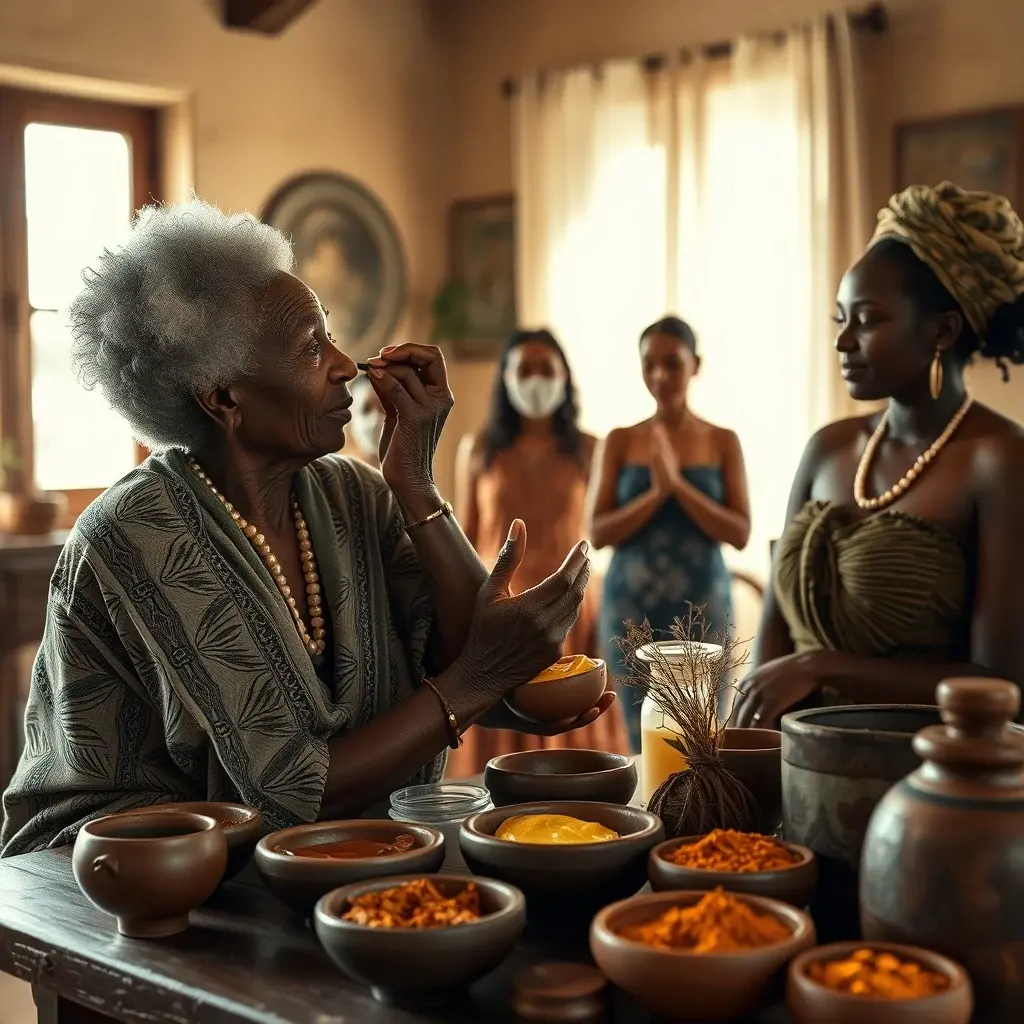
Ancestral beauty rituals, particularly those centered around melanin-rich skin, have resurfaced as a significant cultural and commercial force in global skincare. Over the past decade, communities across Africa, the Caribbean, Latin America, and the African diaspora in North America and Europe have increasingly reclaimed and revitalized traditional practices that celebrate and care for dark skin. This movement intersects with broader conversations about cultural identity, self-empowerment, and the decolonization of beauty standards. The resurgence is not merely a trend but a systemic shift, driven by a combination of grassroots activism, scientific validation, and market demand for inclusive, heritage-inspired products.
Executive Summary
Who: The primary stakeholders in this movement include Indigenous communities, Black and Brown consumers, independent beauty brands, dermatologists specializing in melanin-rich skin, cultural historians, and multinational corporations expanding into heritage-inspired skincare lines. What: The phenomenon involves the revival, adaptation, and commercialization of ancestral beauty rituals, such as the use of shea butter, black soap, turmeric, and indigenous plant-based treatments, tailored for modern skincare needs. When: While these practices have existed for centuries, their mainstream resurgence gained momentum in the early 2010s, coinciding with the natural beauty movement and increased representation of dark-skinned individuals in media. Where: The movement is global, with epicenters in West Africa (Nigeria, Ghana), the Caribbean (Jamaica, Haiti), and urban hubs in the United States (Atlanta, New York) and the United Kingdom (London). Why: The revival is rooted in a desire to reclaim cultural identity, challenge Eurocentric beauty norms, and address the historical marginalization of melanin-rich skin in the beauty industry. How: The movement operates through digital storytelling, e-commerce platforms, scientific research validating traditional ingredients, and collaborations between elders preserving generational wisdom and younger entrepreneurs.
The Scope, Historical Context, and Stakeholders
The modern revival of ancestral beauty rituals is not an isolated phenomenon but part of a broader historical continuum. For centuries, Indigenous and African communities developed sophisticated skincare practices using locally sourced ingredients, often tied to spiritual and communal rituals. These practices were disrupted during colonialism, which imposed foreign beauty standards and eroded traditional knowledge systems. The late 20th and early 21st centuries, however, witnessed a deliberate effort to reclaim and adapt these rituals, fueled by a growing awareness of their cultural and scientific value.
Key stakeholders include:
- Indigenous and Diasporic Communities: Guardians of generational wisdom, they serve as both practitioners and cultural ambassadors.
- Beauty Brands: Ranging from small, Black-owned businesses to multinational corporations like Unilever and L’Oréal, which have launched heritage-inspired product lines.
- Dermatologists and Researchers: Professionals studying the efficacy of traditional ingredients, such as the antimicrobial properties of African black soap or the anti-inflammatory benefits of turmeric.
- Activists and Influencers: Individuals leveraging social media to challenge beauty norms and promote melanin-positive messaging.
- Regulatory Bodies: Organizations like the U.S. Food and Drug Administration (FDA) and the European Medicines Agency (EMA), which oversee the safety and marketing claims of heritage-inspired products.
Chronological Background
The timeline below outlines the key milestones in the evolution of ancestral beauty rituals and their integration into modern skincare:
- Pre-Colonial Era (Before 15th Century): Indigenous communities across Africa, the Americas, and Asia develop skincare rituals using natural ingredients like shea butter, moringa, and aloe vera. These practices are often tied to spiritual ceremonies and communal well-being.
- Colonial Period (15th–20th Century): European colonization disrupts traditional practices, imposing foreign beauty standards and eroding Indigenous knowledge systems. Many rituals are preserved in secret or adapted to survive.
- Post-Colonial Era (Mid-20th Century): Independence movements in Africa and the Caribbean spark a renewed interest in cultural heritage, including beauty practices. However, Western beauty ideals continue to dominate global markets.
- 1990s–2000s: The natural beauty movement gains traction, with brands like The Body Shop and Burt’s Bees popularizing plant-based skincare. However, these brands often appropriate Indigenous knowledge without proper credit or compensation.
- 2010s: The rise of social media platforms like Instagram and YouTube enables Black and Brown creators to share their beauty rituals, fostering a global community. Hashtags like #MelaninPoppin and #BlackGirlMagic amplify visibility. Brands like SheaMoisture and Nubian Heritage, founded by Black entrepreneurs, gain mainstream recognition.
- 2015–Present: Scientific research begins to validate traditional ingredients. For example, a 2018 study published in the Journal of Clinical and Aesthetic Dermatology highlights the benefits of shea butter for eczema and hyperpigmentation in dark skin. Multinational corporations launch heritage-inspired lines, such as Unilever’s Positive Beauty initiative, which includes products tailored for melanin-rich skin.
Operational Mechanics
The revival of ancestral beauty rituals operates through a multi-faceted ecosystem:
- Ingredient Sourcing: Brands collaborate with Indigenous communities to ethically source ingredients like shea butter from Ghana, black soap from Nigeria, and moringa from India. Fair-trade certifications and direct partnerships ensure economic benefits for local producers.
- Product Development: Traditional recipes are adapted for modern consumers, often combining natural ingredients with advanced dermatological science. For example, brands may infuse shea butter with hyaluronic acid to enhance hydration.
- Digital Storytelling: Social media platforms serve as critical tools for education and community-building. Influencers and brands share tutorials, historical context, and user testimonials to normalize melanin-rich skincare routines.
- Retail and Distribution: E-commerce platforms like Etsy and Shopify enable small businesses to reach global audiences, while major retailers like Sephora and Target expand their offerings to include heritage-inspired brands. In 2021, Sephora launched its Black-Owned Brands initiative, featuring over 20 brands focused on melanin-rich skin.
- Scientific Validation: Research institutions and dermatologists conduct studies to validate the efficacy of traditional ingredients. For instance, a 2020 study by the University of Lagos found that African black soap effectively treats acne in dark skin due to its antibacterial properties.
Quantitative Data Analysis
The economic and cultural impact of the ancestral beauty ritual movement is measurable through several key metrics:
| Metric | Data Point | Source |
|---|---|---|
| Global Market Size for Melanin-Inclusive Skincare | $3.2 billion in 2023, projected to reach $5.8 billion by 2028 | Statista (2023) |
| Growth Rate of Black-Owned Beauty Brands | 22% annual growth from 2018 to 2023 | McKinsey & Company (2022) |
| Social Media Engagement for #MelaninSkincare | Over 1.2 million posts on Instagram (2023) | Instagram Analytics |
| Consumer Preference for Heritage Ingredients | 68% of Black consumers prefer products with shea butter or black soap | Nielsen (2021) |
| Scientific Studies on Traditional Ingredients | Over 150 peer-reviewed studies published since 2015 | PubMed |
Systemic Impacts
The revival of ancestral beauty rituals has far-reaching implications across cultural, economic, and social dimensions:
- Cultural Reclamation: The movement empowers communities to reclaim narratives around beauty and identity, challenging centuries of Eurocentric standards. It fosters intergenerational knowledge transfer, as elders share rituals with younger generations.
- Economic Empowerment: The growth of Black-owned beauty brands creates economic opportunities within marginalized communities. For example, SheaMoisture, founded in 1991, now generates over $100 million in annual revenue and reinvests in community development projects in Ghana.
- Scientific Innovation: The validation of traditional ingredients drives innovation in dermatology. Research into melanin-specific skincare has led to breakthroughs in treating hyperpigmentation, eczema, and acne in dark skin, conditions often overlooked by mainstream dermatology.
- Market Disruption: The demand for melanin-inclusive products has forced multinational corporations to diversify their offerings. Brands like Fenty Beauty, launched by Rihanna in 2017, set new industry standards by offering 40+ foundation shades, prompting competitors to follow suit.
- Social Justice: The movement intersects with broader social justice efforts, advocating for representation in media, advertising, and clinical research. Campaigns like #DiversifyDerm highlight the lack of diversity in dermatological studies, pushing for more inclusive research.
Competing Stakeholder Perspectives
The revival of ancestral beauty rituals is not without controversy, as stakeholders hold divergent views on its cultural, ethical, and commercial implications.
Cultural Historians and Elders:
“These rituals are not just about skincare; they are sacred practices tied to our identity and spirituality,” says Dr. Ama Boateng, a cultural historian and author of The Sacred Glow: Ancestral Beauty Rituals of West Africa. “The commercialization of these practices risks diluting their cultural significance. Brands must collaborate with communities, not exploit them.”
Dermatologists and Researchers:
Dr. Michelle Henry, a board-certified dermatologist specializing in melanin-rich skin, emphasizes the scientific value of traditional ingredients. “We are only beginning to understand the potential of these ingredients. For example, turmeric’s anti-inflammatory properties are well-documented, but its efficacy in treating melasma in dark skin is still understudied. More research is needed to bridge the gap between tradition and science.”
Beauty Industry Executives:
Esi Eggleston Bracey, Executive Vice President and Chief Operating Officer of Unilever North America, advocates for corporate responsibility in the space. “The beauty industry has a history of appropriating cultural practices without proper credit or compensation. At Unilever, we are committed to ethical sourcing and partnerships that uplift the communities we work with. This is not just good ethics; it’s good business.”
Activists and Consumers:
Nia Johnson, founder of the #MelaninMagic movement, highlights the empowering potential of the trend. “For too long, dark skin was seen as something to be lightened or hidden. This movement is about celebrating our natural beauty and demanding products that cater to our needs. However, we must remain vigilant against performative allyship and ensure that Black-owned brands are not sidelined by larger corporations.”
The commercial success of heritage-inspired skincare has also sparked debates about cultural appropriation. Critics argue that multinational corporations often repackage traditional knowledge as “innovative” or “exotic” without acknowledging its origins. For example, the popularity of “African black soap” in Western markets has led to mass-produced versions that dilute the original recipe, raising concerns about authenticity and exploitation.
Regulatory and Ethical Challenges
The rapid growth of the melanin-inclusive skincare market has outpaced regulatory frameworks, leading to several challenges:
- Ingredient Safety: The lack of standardized regulations for natural ingredients poses risks. For instance, some traditional remedies, like lemon juice for brightening, can cause irritation or hyperpigmentation in dark skin if misused.
- Marketing Claims: Brands often make unsubstantiated claims about the benefits of heritage ingredients. In 2022, the FDA issued warning letters to several companies for marketing products with unproven claims about treating skin conditions.
- Cultural Appropriation: The line between appreciation and appropriation remains contentious. Brands that fail to credit or compensate Indigenous communities for their knowledge face backlash, as seen in the 2021 controversy surrounding a major beauty brand’s “tribal-inspired” skincare line.
- Accessibility: While heritage-inspired products gain popularity, they often come with a premium price tag, limiting access for low-income consumers. Advocates call for more affordable options and community-based distribution models.
The global skincare industry is at a crossroads, with ancestral beauty rituals poised to shape its future. Upcoming regulatory milestones, such as the FDA’s proposed guidelines for natural skincare ingredients, could standardize safety and marketing practices. Meanwhile, market catalysts like the growing demand for clean beauty and the rise of Gen Z consumers, who prioritize authenticity and inclusivity, will continue to drive innovation. The movement’s long-term sustainability hinges on striking a balance between commercialization and cultural preservation, ensuring that the communities at the heart of these rituals remain its primary beneficiaries. As the conversation evolves, the challenge will be to honor the past while adapting to the future, creating a beauty industry that is as diverse as the skin it serves.
You may also like
-
The Comprehensive Dynamics of Melanin Ritual Skincare: Science, Routines, and Equity for Medium to Dark Skin Tones in 2025
-
The Comprehensive Framework for Melanin-Conscious Skincare: Evidence-Based Strategies for Hyperpigmentation, Brightening, and Barrier Resilience
-
The Global Resurgence of Ancestral Melanin Care: Tradition, Science, and Identity in Contemporary Skincare
-
The Essential Components of Melanin Ritual Skincare: A 2025 Breakdown of Dark Skin Radiance, Formulation Science, and Dermatological Precision for Rich Complexions
-
Sustainable Fashion: How the Industry is Shifting Toward Ethical and Eco-Friendly Practices