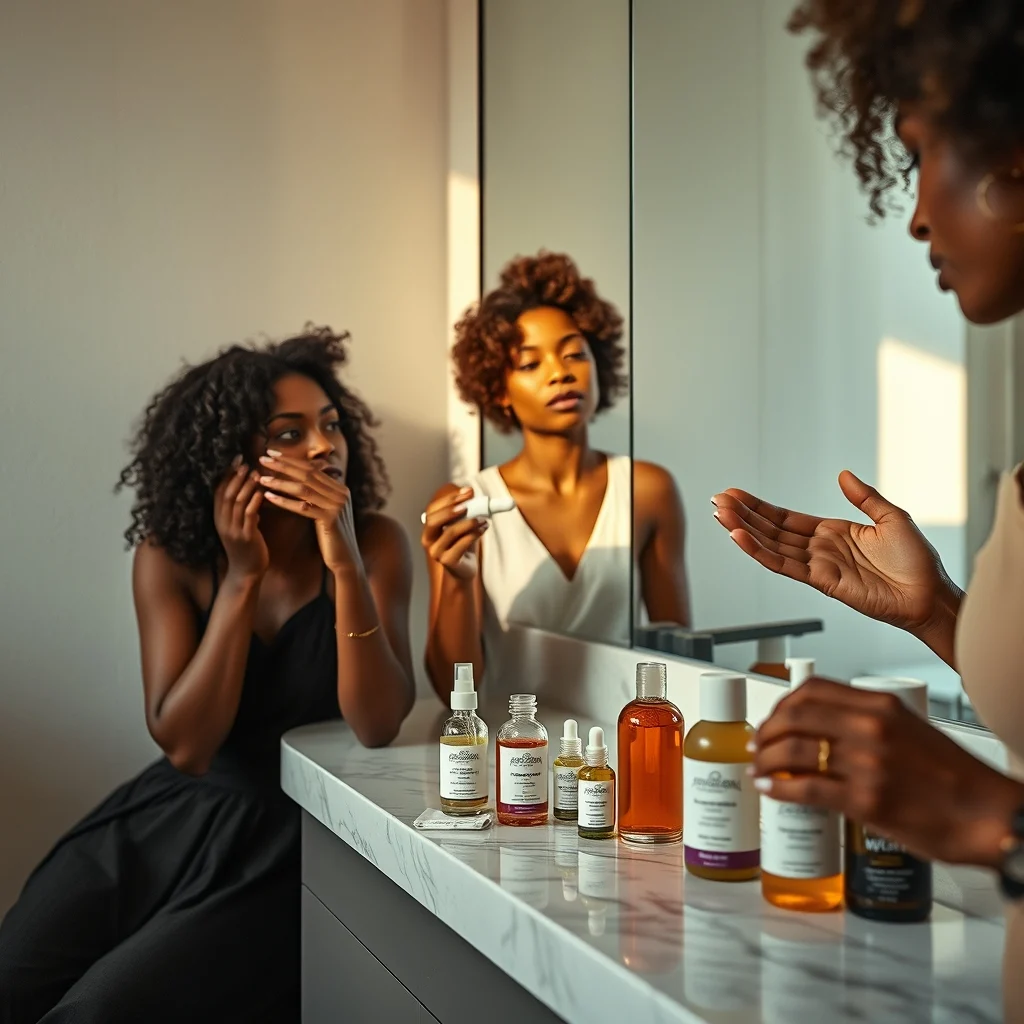
In 2025, the skincare industry is witnessing a transformative shift toward inclusivity, with Melanin Ritual Skincare emerging as a cornerstone for individuals with medium to dark skin tones. This movement prioritizes formulations that enhance dark skin radiance while addressing unique dermatological needs, such as hyperpigmentation, moisture barrier integrity, and sun protection without whitecast. Brands, dermatologists, and consumers are collaborating to redefine standards, ensuring products are not only effective but also culturally attuned to the nuances of melanin-rich skin. The demand for anti-whitecast sunscreen, hydrating serums for medium-dark skin, and chemical peels safe for melanin has surged, driven by a growing awareness of the disparities in skincare research and accessibility.
This evolution is not merely a trend but a response to decades of underrepresentation in dermatological studies and product development. Historically, skincare formulations were optimized for lighter skin tones, often neglecting the specific concerns of melanin-rich complexions, such as post-inflammatory hyperpigmentation (PIH) and uneven skin tone. The current landscape reflects a convergence of scientific innovation, consumer advocacy, and market demand, with stakeholders ranging from indie brands to multinational corporations investing in research to bridge these gaps. The shift is also fueled by social media, where communities share glow routines for medium-dark skin and advocate for transparency in ingredient efficacy and safety.
The Historical Context: From Neglect to Nuanced Care
The skincare industry’s approach to melanin-rich skin has undergone a slow but significant transformation. For much of the 20th century, dermatological research disproportionately focused on lighter skin tones, leading to a lack of data on how active ingredients like retinoids, hydroquinone, and chemical exfoliants interact with higher concentrations of melanin. A 2018 study published in the Journal of the American Academy of Dermatology revealed that only 4.5% of images in dermatology textbooks depicted dark skin, highlighting the systemic oversight. This gap contributed to misdiagnoses, ineffective treatments, and a dearth of products tailored to hydrating dark skin or addressing hyperpigmentation treatment.
By the early 2010s, consumer advocacy began to reshape the narrative. Influencers and dermatologists of color, such as Dr. Michelle Henry and Dr. Adeline Kikam, leveraged platforms like Instagram and YouTube to educate audiences about melanin magic skincare and the importance of evening rituals for dark skin. Their efforts coincided with the rise of brands like Black Girl Sunscreen and Topicals, which prioritized formulations free of whitecast and rich in melanin-nourishing ingredients like niacinamide, licorice root extract, and ceramides. The launch of these brands marked a turning point, proving that there was a lucrative and underserved market for sunscreen for rich skin tones and nourishing dark skin serums.
Formulation Science: The Mechanics of Melanin-Optimized Skincare
The science behind melanin ritual skincare revolves around three core principles: protection, hydration, and targeted treatment. Melanin, the pigment responsible for skin color, provides some natural protection against UV radiation but is not sufficient to prevent long-term damage. This necessitates the use of anti-whitecast sunscreen, which typically employs mineral filters like zinc oxide or chemical filters like avobenzone, formulated to blend seamlessly into deeper skin tones. A 2023 report by the Skin of Color Society found that 68% of individuals with dark skin avoid sunscreen due to whitecast, underscoring the need for innovation in this space.
Hydration is another critical focus, as melanin-rich skin is prone to transepidermal water loss (TEWL), which can compromise the dark skin moisture barrier. Products like hydrating serums for medium-dark skin often contain humectants such as hyaluronic acid and glycerin, paired with occlusives like squalane or shea butter to lock in moisture. Additionally, gentle exfoliation for melanin is essential to prevent buildup and promote cell turnover without triggering PIH. Polyhydroxy acids (PHAs) and mandelic acid have gained popularity for their ability to exfoliate without causing irritation, making them ideal for flawless medium-dark complexions.
For targeted concerns like hyperpigmentation treatment, ingredients such as tranexamic acid, alpha arbutin, and vitamin C are staples. These compounds inhibit melanin production at the cellular level, helping to fade dark spots and achieve an even skin tone. However, their efficacy varies based on concentration, formulation stability, and individual skin chemistry. Dr. Jeanine Downie, a board-certified dermatologist, notes, “The key to treating hyperpigmentation in melanin-rich skin is patience and consistency. Over-aggressive treatments can worsen PIH, so it’s crucial to use products that are both effective and gentle.”
Quantitative Data: Market Growth and Consumer Behavior
The market for melanin-optimized skincare has experienced exponential growth, driven by both demand and innovation. According to a 2024 report by NielsenIQ, sales of brightening melanin skin products increased by 42% year-over-year, outpacing the overall skincare market growth of 18%. The same report highlighted that 76% of Black and Hispanic consumers prioritize skincare products formulated for their skin tone, compared to 45% in 2020. This shift is reflected in the proliferation of brands catering to these demographics, with the number of melanin-focused skincare lines doubling between 2020 and 2024.
The table below illustrates the growth in key product categories within the melanin skincare market:
| Product Category | 2020 Market Value (USD) | 2024 Market Value (USD) | CAGR (2020-2024) |
|---|---|---|---|
| Anti-Whitecast Sunscreen | $120M | $380M | 33% |
| Hyperpigmentation Treatments | $210M | $520M | 25% |
| Hydrating Serums for Medium-Dark Skin | $85M | $290M | 36% |
| Chemical Peels Safe for Melanin | $45M | $150M | 35% |
Consumer behavior data also reveals a preference for multi-functional products. A 2023 survey by Essence Magazine found that 63% of respondents with dark skin tones seek products that address at least two concerns, such as hydration and brightening or sun protection and anti-aging. This trend has led to the rise of hybrid formulations, such as nourishing dark skin serums that combine vitamin C with ferulic acid for enhanced stability and efficacy.
Systemic Impacts: Beyond the Beauty Aisle
The ripple effects of the melanin skincare movement extend beyond product sales. Dermatological education is evolving to include more comprehensive training on skin of color. The American Academy of Dermatology (AAD) now requires residency programs to incorporate modules on diagnosing and treating conditions in melanin-rich skin, a change implemented in 2022. Dr. Susan Taylor, founder of the Skin of Color Society, emphasizes, “This is a long-overdue correction. For too long, dermatologists were ill-equipped to address the unique needs of patients with dark skin, leading to disparities in care.”
Economically, the growth of melanin-focused brands has created opportunities for entrepreneurs of color. A 2024 study by McKinsey & Company found that Black-owned beauty brands received 16% of venture capital funding in the beauty sector in 2023, up from just 2% in 2018. However, challenges remain, particularly in scaling distribution and competing with established multinational brands. “The playing field is still uneven,” says Olamide Olowe, founder of Topicals. “While there’s more visibility, access to retail shelf space and investment remains a hurdle for many indie brands.”
Culturally, the movement has fostered a sense of community and empowerment. Social media hashtags like #MelaninMagic and #DarkSkinGlow have amassed millions of posts, creating spaces for individuals to share everyday dark skin care routines and celebrate their complexions. This visibility has also sparked conversations about colorism and the historical undervaluation of dark skin, further amplifying the demand for inclusive beauty standards.
Competing Stakeholder Perspectives: Innovation vs. Accessibility
The melanin skincare space is not without its tensions. One of the primary debates revolves around the balance between innovation and accessibility. While brands like Fenty Skin and Tower 28 have set new standards for inclusivity, their products often come with premium price tags, limiting access for lower-income consumers. “Innovation is meaningless if it’s not accessible,” argues Dr. Adeline Kikam, a dermatologist and skincare educator. “We need more affordable options that don’t compromise on quality or efficacy.”
Another point of contention is the regulation of marketing claims. The U.S. Food and Drug Administration (FDA) has yet to establish specific guidelines for terms like “brightening” or “even tone,” leading to ambiguity in product labeling. This lack of regulation has resulted in some brands making unsubstantiated claims about their ability to fade dark spots or achieve a flawless medium-dark complexion. “Consumers deserve transparency,” says Dr. Henry. “Without standardized testing and labeling, it’s difficult to discern which products are truly effective.”
Environmental sustainability is also a growing concern. The rise in demand for melanin-optimized products has led to an increase in packaging waste, with many brands relying on single-use plastics. Some companies, like Briogeo and Pattern Beauty, have responded by adopting refillable packaging and eco-friendly materials, but industry-wide adoption remains slow. “Sustainability should be a priority, not an afterthought,” notes Olowe. “The beauty industry has a responsibility to minimize its environmental impact, especially as it grows.”
The future of melanin ritual skincare
hinges on several pending variables. Regulatory bodies like the FDA are under pressure to establish clearer guidelines for skincare claims, particularly those targeting melanin-rich skin. The upcoming 2025 Skin of Color Dermatology Symposium is expected to address these gaps, with stakeholders advocating for standardized testing protocols for hyperpigmentation treatments and sunscreens. Additionally, advancements in biotechnology, such as the development of melanin-mimicking ingredients, could revolutionize formulations by enhancing their compatibility with deeper skin tones. Market dynamics will also play a crucial role. As competition intensifies, brands will need to differentiate themselves through innovation, affordability, or sustainability. The rise of AI-driven personalized skincare, which tailors routines based on genetic and environmental factors, presents both an opportunity and a challenge. While it could enhance efficacy, it may also exacerbate accessibility issues if not implemented equitably. For consumers, the key lies in staying informed and advocating for products that align with their values, whether that’s efficacy, affordability, or environmental responsibility. The journey toward truly inclusive skincare is ongoing, but the progress made thus far signals a future where rich melanin glow is celebrated and nurtured with the same rigor as any other skin type.
You may also like
-
The Comprehensive Dynamics of Melanin Ritual Skincare: Science, Routines, and Equity for Medium to Dark Skin Tones in 2025
-
The Comprehensive Framework for Melanin-Conscious Skincare: Evidence-Based Strategies for Hyperpigmentation, Brightening, and Barrier Resilience
-
The Global Resurgence of Ancestral Melanin Care: Tradition, Science, and Identity in Contemporary Skincare
-
The Essential Components of Melanin Ritual Skincare: A 2025 Breakdown of Dark Skin Radiance, Formulation Science, and Dermatological Precision for Rich Complexions
-
Sustainable Fashion: How the Industry is Shifting Toward Ethical and Eco-Friendly Practices