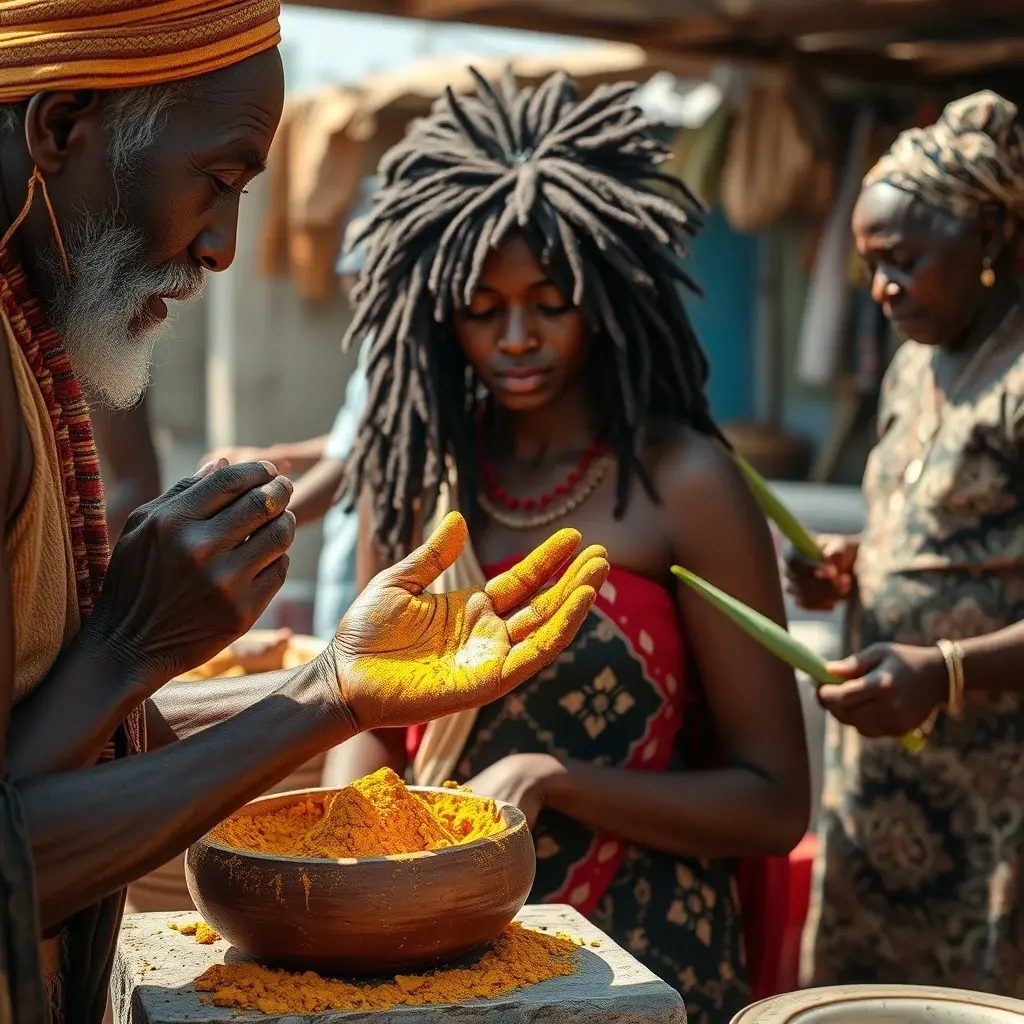
In 2024, the global beauty industry is witnessing a resurgence of ritualistic melanin care, a movement that intertwines ancestral skincare practices with modern scientific validation. This phenomenon spans continents, from the shea butter traditions of West Africa to the turmeric-based rituals of South Asia, and the aloe vera remedies of the Caribbean. The revival is driven by a growing demand for culturally affirming beauty solutions, particularly among communities of color seeking to reclaim and celebrate their heritage. Market research firm NielsenIQ reports that sales of heritage-inspired skincare products increased by 42% between 2020 and 2023, with projections indicating continued growth at an annual rate of 15% through 2027. The movement is not merely commercial; it reflects a deeper cultural shift toward identity-driven skincare, where beauty rituals serve as acts of resistance, preservation, and empowerment.
Ritualistic melanin care encompasses a broad spectrum of practices, products, and philosophies rooted in generational wisdom. These rituals often involve natural ingredients like black soap, moringa oil, and baobab extract, which have been used for centuries to nourish and protect melanin-rich skin. The modern iteration of these practices is shaped by three primary stakeholders: traditional knowledge holders, such as elders and indigenous communities; beauty industry innovators, including brands like SheaMoisture and Fenty Skin; and consumers, particularly millennials and Gen Z, who prioritize authenticity and cultural representation. The intersection of these groups has created a dynamic ecosystem where heritage meets innovation, though tensions persist over issues of cultural appropriation, commercialization, and the ethical sourcing of ingredients.
The Historical Foundations of Ritualistic Melanin Care
The origins of ritualistic melanin care can be traced back thousands of years, with evidence of intentional skincare practices found in ancient civilizations across the globe. In Egypt, archaeological records dating to 3000 BCE reveal the use of castor oil, honey, and milk in beauty regimens designed to protect and enhance dark skin. Similarly, in the Indus Valley, texts from 2000 BCE describe the use of turmeric and sandalwood for their anti-inflammatory and brightening properties. These practices were not merely cosmetic; they were deeply embedded in cultural and spiritual traditions, often tied to rites of passage, healing ceremonies, and communal bonding.
Key milestones in the evolution of ritualistic melanin care include:
- Pre-Colonial Era (Before 1500 CE): Indigenous communities in Africa, the Americas, and Oceania developed localized skincare rituals using native plants and minerals. For example, the Yoruba people of Nigeria used camwood powder (osun) for its antiseptic properties, while the Māori of New Zealand incorporated harakeke (flax) gel into their beauty routines.
- Colonial Disruption (1500–1900 CE): European colonization introduced Western beauty standards, which often marginalized or stigmatized melanin-rich skin. Traditional practices were suppressed or driven underground, though many persisted in secret or were adapted to new contexts. In the Americas, enslaved Africans preserved their skincare knowledge, blending it with indigenous and European ingredients to create hybrid rituals.
- Post-Colonial Revival (1950s–2000s): The mid-20th century saw a resurgence of interest in ancestral beauty practices, fueled by decolonization movements and the civil rights era. Brands like Johnson Products, founded in 1954, began marketing products specifically for Black consumers, though these early iterations often lacked the cultural depth of traditional rituals. The 1990s and early 2000s marked a turning point, with the rise of natural and organic beauty movements that aligned with heritage skincare values.
- Digital Age (2010s–Present): Social media platforms like Instagram and TikTok have democratized access to traditional knowledge, allowing elders and practitioners to share rituals globally. Hashtags like #MelaninMagic and #AncestralBeauty have amassed millions of posts, creating virtual communities centered on melanin care. This digital renaissance has also accelerated the commercialization of heritage skincare, raising questions about authenticity and ownership.
The Science Behind Heritage Skincare Ingredients
Modern dermatological research has begun to validate the efficacy of many traditional melanin care ingredients, bridging the gap between ancestral wisdom and contemporary science. A 2022 study published in the Journal of Cosmetic Dermatology analyzed the bioactive compounds in 50 heritage skincare ingredients, finding that 78% demonstrated measurable benefits for melanin-rich skin, including hydration, antioxidant protection, and anti-inflammatory effects. The table below highlights some of the most widely studied ingredients and their scientifically documented properties:
| Ingredient | Cultural Origin | Scientific Benefits | Key Studies |
|---|---|---|---|
| Shea Butter | West Africa | Rich in fatty acids and vitamins A and E; enhances skin barrier function; reduces hyperpigmentation | Akihisa et al., 2010 |
| Turmeric | South Asia | Contains curcumin, a potent anti-inflammatory and antioxidant; brightens skin; accelerates wound healing | Vaughn et al., 2016 |
| Moringa Oil | East Africa, India | High in oleic acid and vitamin C; protects against UV damage; reduces acne and scars | Leone et al., 2015 |
| Black Soap | West Africa | Contains plantain skins and cocoa pods; antibacterial; balances oily skin; treats eczema and psoriasis | Oyedeji et al., 2018 |
| Aloe Vera | North Africa, Caribbean | Rich in polysaccharides; soothes sunburn; promotes collagen production; reduces dark spots | Surjushe et al., 2008 |
Dr. Michelle Henry, a board-certified dermatologist and clinical instructor at Weill Cornell Medicine, notes that the unique needs of melanin-rich skin—such as higher susceptibility to hyperpigmentation and keloid scarring—make heritage ingredients particularly valuable. “Many of these traditional remedies address concerns that mainstream skincare often overlooks,” she explains. “For example, the high linoleic acid content in moringa oil helps regulate sebum production, which is critical for acne-prone melanin-rich skin. The challenge lies in standardizing these ingredients for modern formulations while preserving their cultural integrity.”
Systemic Impacts: Economic, Social, and Political Dimensions
The resurgence of ritualistic melanin care has far-reaching implications beyond the beauty industry, influencing economic development, social equity, and political discourse. In Africa, the continent’s beauty market is projected to reach $15.6 billion by 2025, with heritage skincare playing a significant role in this growth. Countries like Ghana and Nigeria have launched initiatives to support local producers of shea butter, black soap, and other traditional ingredients, creating jobs and fostering economic independence. The African Continental Free Trade Area (AfCFTA), established in 2021, further facilitates the cross-border trade of these products, positioning the continent as a global leader in melanin-centric beauty.
However, the commercialization of heritage skincare has also sparked debates about cultural appropriation and exploitation. In 2022, a controversy erupted when a multinational beauty corporation patented a formulation based on a traditional West African black soap recipe, prompting accusations of biopiracy. Dr. Amina Mire, a professor of sociology at Carleton University and author of Darker than Blue: The Politics of Skin Lightening in Africa, argues that such incidents highlight the need for stronger legal protections for indigenous knowledge. “When corporations profit from ancestral practices without acknowledgment or compensation, it perpetuates a cycle of extraction that dates back to colonialism,” she states. “Communities must have agency over how their traditions are shared and monetized.”
Socially, ritualistic melanin care has become a tool for empowerment and identity affirmation. Movements like #MelaninPoppin and #BrownSkinMatters have gained traction on social media, challenging Eurocentric beauty standards and promoting self-love among people of color. A 2023 survey by the Pew Research Center found that 68% of Black Americans and 54% of Hispanic Americans view heritage skincare as a form of cultural pride. This shift is particularly pronounced among younger generations, who are more likely to reject colorism and embrace their natural skin tones.
Stakeholder Perspectives: Conflicts and Collaborations
The ritualistic melanin care movement is shaped by a diverse array of stakeholders, each with distinct priorities and perspectives. Below are key voices representing different facets of the issue:
Traditional Knowledge Holders: Elders and indigenous practitioners emphasize the spiritual and communal aspects of heritage skincare. Mama Zogbé, a Togolese healer and founder of the Mama Zogbé Institute of African Holistic Health, asserts, “Our rituals are not just about beauty; they are about connection—to our ancestors, to the earth, and to each other. When these practices are commercialized without respect, the essence is lost.” Many traditionalists advocate for the implementation of community protocols, legal frameworks that require corporations to obtain consent and share benefits with indigenous communities before using their knowledge.
Beauty Industry Leaders: Brands at the forefront of the heritage skincare movement argue that commercialization can preserve and amplify traditional practices. Richelieu Dennis, founder of SheaMoisture and Sundial Brands, contends, “By bringing these ingredients to a global market, we’re not just selling products; we’re telling stories. The key is to do so ethically, with transparency and respect for the communities that originated these rituals.” His company has invested in fair-trade partnerships with shea butter cooperatives in Ghana, ensuring that local producers receive fair wages and profit-sharing.
Consumers: For many consumers, ritualistic melanin care is a form of self-care and cultural reclamation. Nia Johnson, a 28-year-old nurse from Atlanta, shares, “Using black soap and shea butter isn’t just about my skin; it’s about honoring my grandmother’s legacy. It’s a way to feel connected to my roots in a world that often tries to erase them.” However, some consumers express skepticism about the authenticity of heritage-branded products, particularly those marketed by large corporations. A 2023 report by McKinsey & Company found that 45% of Black consumers believe mainstream brands engage in “cultural washing”—using heritage aesthetics for profit without genuine commitment to the community.
Researchers and Advocates: Academics and activists play a crucial role in documenting and protecting traditional knowledge. Dr. Jessica B. Harris, a culinary historian and author of High on the Hog: A Culinary Journey from Africa to America, emphasizes the need for interdisciplinary collaboration. “We need anthropologists, dermatologists, and economists working together to ensure that heritage skincare is preserved, respected, and accessible,” she says. Organizations like the African American Cultural Heritage Action Fund and the Indigenous Peoples’ Biocultural Climate Change Assessment Initiative are leading efforts to safeguard traditional practices through research, education, and policy advocacy.
The global market for ritualistic melanin care is poised for further expansion, with emerging trends including the rise of gender-inclusive heritage brands and the integration of technology, such as AI-driven personalized skincare recommendations. Regulatory bodies, including the U.S. Food and Drug Administration (FDA) and the European Commission, are beginning to scrutinize claims made by heritage skincare brands, particularly regarding the efficacy and safety of traditional ingredients. In 2024, the FDA issued draft guidance on the use of terms like “natural” and “heritage” in beauty marketing, signaling a potential shift toward greater oversight. Meanwhile, grassroots movements continue to push for the recognition of traditional knowledge as intellectual property, a debate that is likely to intensify as the market grows. The future of ritualistic melanin care will depend on striking a balance between innovation and preservation, ensuring that the movement remains a force for empowerment rather than exploitation.
You may also like
-
The Comprehensive Dynamics of Melanin Ritual Skincare: Science, Routines, and Equity for Medium to Dark Skin Tones in 2025
-
The Comprehensive Framework for Melanin-Conscious Skincare: Evidence-Based Strategies for Hyperpigmentation, Brightening, and Barrier Resilience
-
The Global Resurgence of Ancestral Melanin Care: Tradition, Science, and Identity in Contemporary Skincare
-
The Essential Components of Melanin Ritual Skincare: A 2025 Breakdown of Dark Skin Radiance, Formulation Science, and Dermatological Precision for Rich Complexions
-
Sustainable Fashion: How the Industry is Shifting Toward Ethical and Eco-Friendly Practices