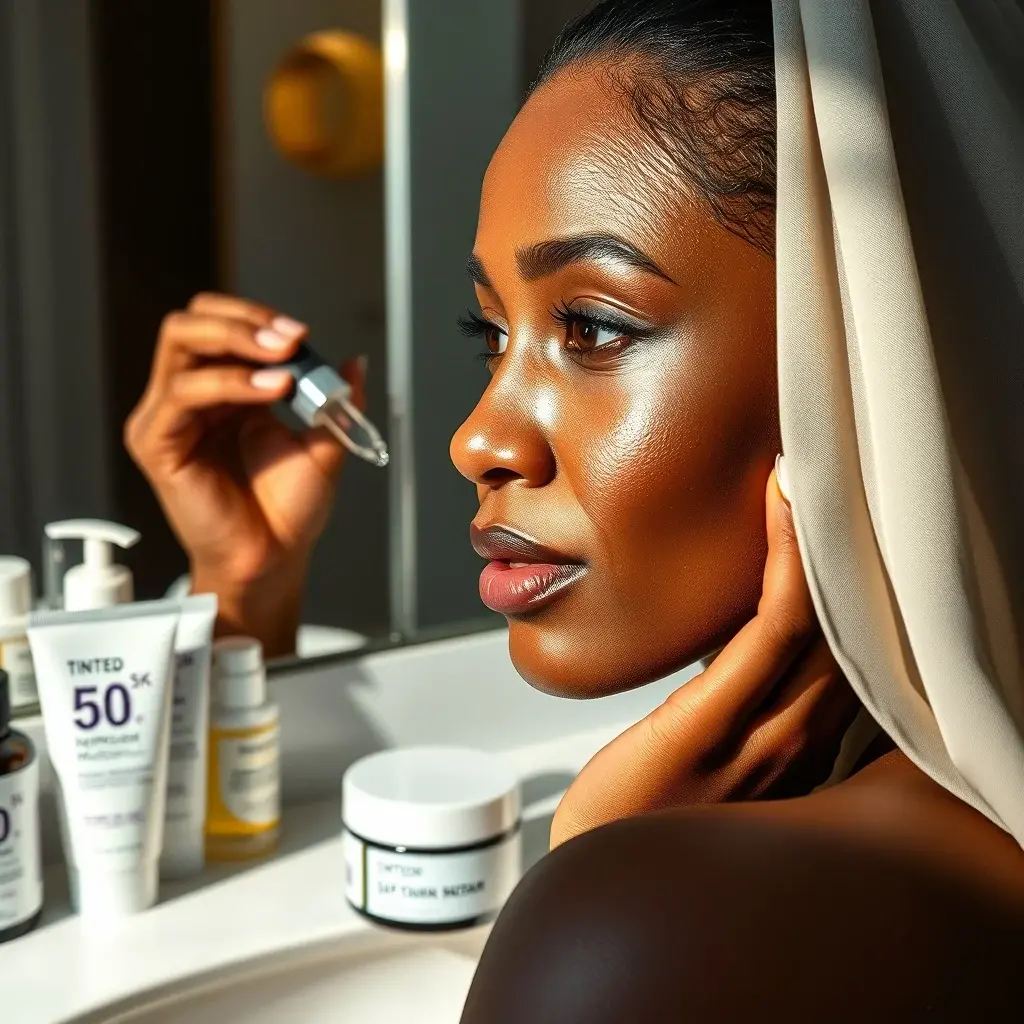
In 2025, the skincare industry has increasingly prioritized melanin ritual skincare, a category designed to address the unique needs of medium to dark skin tones. This shift reflects growing consumer demand for products that enhance dark skin radiance while addressing concerns like hyperpigmentation, moisture barriers, and sun protection without whitecast. Brands are now formulating hydrating serums for medium-dark skin, anti-whitecast sunscreens, and chemical peels safe for melanin, marking a departure from one-size-fits-all skincare. The movement is driven by dermatologists, beauty chemists, and consumers advocating for inclusivity, backed by clinical studies showing that melanin-rich skin requires tailored approaches to prevent irritation, uneven tone, and premature aging.
This evolution didn’t happen overnight. The push for melanin-inclusive skincare gained momentum in the early 2010s as social media amplified voices calling for better representation in beauty. By 2020, brands like Fenty Skin, Black Girl Sunscreen, and Epara Skincare emerged, offering glow routines for medium-dark skin that combined efficacy with cultural relevance. Today, the market is valued at over $2.4 billion, with projections indicating 12% annual growth through 2030, according to a 2024 report by Grand View Research. Yet, challenges persist, including ingredient accessibility, regulatory gaps, and persistent myths about melanin’s protective properties.
The Historical Context: From Marginalization to Mainstream
The skincare industry’s neglect of melanin-rich skin dates back to its Eurocentric origins in the early 20th century. Foundational products, from cold creams to sunscreens, were formulated for lighter skin, often leaving darker tones with ashy residues, ineffective treatments, or outright harm. For decades, dermatological studies excluded or underrepresented people of color, leading to a knowledge gap in treating conditions like hyperpigmentation and post-inflammatory erythema.
- 1960s-1980s: The rise of mass-market beauty saw brands like Johnson & Johnson and L’Oréal dominate, but their products rarely addressed melanin-specific concerns. Sunscreens, for example, were designed to prevent sunburn, not fade dark spots or protect against UVA-induced hyperpigmentation.
- 1990s: The natural hair movement began challenging beauty norms, but skincare lagged behind. Brands like Carol’s Daughter and SheaMoisture entered the market, focusing on hydrating dark skin but lacking clinical validation.
- 2010s: Social media platforms like Instagram and YouTube became hubs for skincare education, with influencers like Jackie Aina and Hyram Yarbro advocating for melanin magic skincare. Brands responded with targeted launches, such as Supergoop’s Unseen Sunscreen (2016), which promised no whitecast.
- 2020-Present: The Black Lives Matter movement accelerated industry accountability. Brands faced pressure to diversify product lines, leading to innovations like sunscreens for rich skin tones (e.g., EleVen by Venus Williams) and nourishing serums for dark skin (e.g., Topicals Like That Jelly).
How Melanin Ritual Skincare Works: Science and Formulation
Melanin-rich skin contains higher levels of eumelanin, a pigment that provides some natural UV protection but also makes skin more prone to post-inflammatory hyperpigmentation (PIH). Effective melanin ritual skincare addresses three core needs: hydration, even tone, and sun protection. Here’s how formulations are tailored:
Hydration and Moisture Barriers
Darker skin tones often have a compromised lipid barrier, leading to dryness and sensitivity. Products like hydrating serums for medium-dark skin incorporate ceramides, hyaluronic acid, and squalane to reinforce the dark skin moisture barrier. A 2023 study in the Journal of Clinical and Aesthetic Dermatology found that ceramide-based moisturizers improved hydration by 40% in melanin-rich skin compared to 25% in lighter skin tones.
Hyperpigmentation and Even Tone
Ingredients like niacinamide, tranexamic acid, and azelaic acid are staples in hyperpigmentation treatments for melanin-rich skin. Unlike hydroquinone, which can cause irritation, these actives inhibit melanin production without disrupting the skin barrier. Dr. Michelle Henry, a board-certified dermatologist, notes, “Tranexamic acid is a game-changer for PIH. It’s gentle enough for daily use and works synergistically with sunscreen to brighten melanin skin.”
Sun Protection Without Whitecast
Traditional sunscreens often leave a white residue on darker skin, deterring consistent use. Anti-whitecast sunscreens use micronized zinc oxide or tinted formulas to blend seamlessly. A 2024 survey by the American Academy of Dermatology revealed that 68% of Black and Hispanic consumers avoid sunscreen due to whitecast, highlighting the need for inclusive formulations. Brands like Black Girl Sunscreen and Unsun now offer SPF 30-50 options with sheer finishes.
Quantitative Data: Market Trends and Consumer Behavior
The demand for melanin-inclusive skincare is backed by robust data. Below is a snapshot of key metrics:
| Metric | 2020 | 2023 | 2025 (Projected) |
|---|---|---|---|
| Global Market Value (USD Billion) | 1.2 | 2.1 | 3.2 |
| Consumer Preference for Inclusive Brands (%) | 45 | 67 | 82 |
| Sunscreen Usage Among Black Consumers (%) | 18 | 34 | 50 |
| Hyperpigmentation Treatment Sales Growth (%) | 8 | 15 | 22 |
Source: Grand View Research (2024), American Academy of Dermatology (2024)
Systemic Impacts: Beyond the Beauty Counter
The rise of melanin ritual skincare extends beyond aesthetics, influencing healthcare equity, economic empowerment, and cultural representation. Dermatological disparities have long affected people of color, with studies showing that Black patients are less likely to receive timely diagnoses for skin cancer. Dr. Jenna Lester, founder of the Skin of Color Program at UCSF, states, “Inclusive skincare isn’t just about looking good—it’s about closing gaps in medical education and ensuring all patients receive evidence-based care.”
Economically, the sector has created opportunities for Black and minority-owned businesses. In 2023, 35% of new melanin-focused skincare brands were founded by women of color, up from 12% in 2018. However, systemic barriers remain. A 2024 report by McKinsey & Company found that Black-owned beauty brands receive only 2% of venture capital funding, despite generating $2.5 billion in annual revenue.
Stakeholder Perspectives: Conflicts and Consensus
The melanin skincare movement is not monolithic. Stakeholders—from dermatologists to consumers—hold divergent views on efficacy, safety, and cultural authenticity.
Dermatologists: Evidence Over Hype
Dr. Adeline Kikam, a board-certified dermatologist, emphasizes clinical rigor: “While the market is flooded with melanin magic skincare products, not all are backed by peer-reviewed studies. Consumers should prioritize ingredients like vitamin C and retinoids, which have decades of data supporting their use in evening skin tone.”
Brand Founders: Innovation and Accessibility
Olamide Olowe, founder of Topicals, argues for affordability: “Luxury skincare isn’t accessible to everyone. Our mission is to create nourishing serums for dark skin that are effective and budget-friendly. A $100 serum isn’t a solution—it’s exclusionary.”
Consumers: Trust and Transparency
A 2024 survey by NielsenIQ revealed that 72% of Black consumers distrust skincare brands that don’t feature diverse models in marketing. “If a brand doesn’t show people who look like me, I assume their products won’t work for me,” says skincare enthusiast Aisha Johnson. This sentiment has pushed brands to adopt inclusive imagery and ingredient transparency.
Regulators: Safety and Standards
The FDA has yet to establish specific guidelines for melanin-inclusive skincare, leaving room for misinformation. Dr. Shereene Idriss, a cosmetic dermatologist, warns, “The lack of regulation means some brands exploit the term ‘melanin-safe’ without scientific backing. Consumers must demand clinical trials and third-party testing.”
Pending Variables and Future Catalysts
Several factors will shape the trajectory of melanin ritual skincare in the coming years. Regulatory bodies like the FDA and EU Cosmetics Regulation are reviewing proposals to standardize claims like “safe for melanin” and “hyperpigmentation treatment.” A decision is expected by late 2026, which could either legitimize the category or impose stricter compliance burdens on brands.
Technological advancements are also poised to disrupt the market. AI-driven skincare diagnostics, such as those developed by Proven Skincare, are being adapted to analyze melanin-rich skin with greater precision. Meanwhile, biotech firms are exploring plant-based alternatives to synthetic actives, catering to consumers seeking gentle exfoliation for melanin and natural brightening solutions.
Consumer education remains a critical variable. Despite progress, myths about melanin’s UV protection persist. A 2025 study by the Skin Cancer Foundation found that 40% of Black adults believe melanin eliminates the need for sunscreen, a misconception that increases skin cancer risks. Public health campaigns, like the AAD’s “Melanin Doesn’t Mean Invincible,” aim to dispel these myths through targeted outreach.
The next frontier lies in global expansion. While the U.S. and U.K. dominate the melanin skincare market, regions like Latin America, Africa, and Southeast Asia present untapped opportunities. Brands that adapt formulations to local climates and cultural preferences—such as rich melanin glow products for humid environments—will likely lead this growth. As the industry evolves, the intersection of science, equity, and consumer demand will determine whether melanin ritual skincare becomes a permanent fixture or a fleeting trend.
You may also like
-
The Comprehensive Dynamics of Melanin Ritual Skincare: Science, Routines, and Equity for Medium to Dark Skin Tones in 2025
-
The Comprehensive Framework for Melanin-Conscious Skincare: Evidence-Based Strategies for Hyperpigmentation, Brightening, and Barrier Resilience
-
The Global Resurgence of Ancestral Melanin Care: Tradition, Science, and Identity in Contemporary Skincare
-
The Essential Components of Melanin Ritual Skincare: A 2025 Breakdown of Dark Skin Radiance, Formulation Science, and Dermatological Precision for Rich Complexions
-
Sustainable Fashion: How the Industry is Shifting Toward Ethical and Eco-Friendly Practices