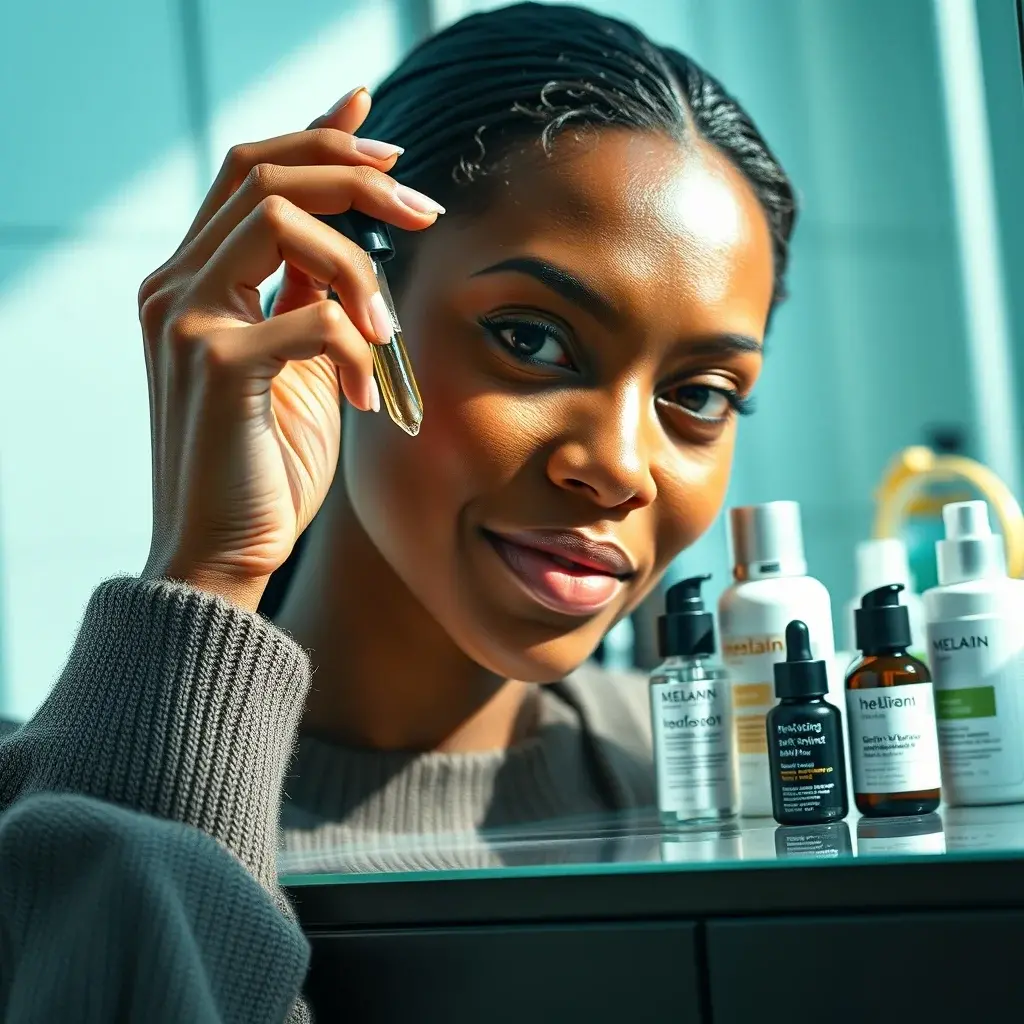
In 2025, the global skincare industry has pivoted toward inclusivity, with melanin ritual skincare emerging as a cornerstone for consumers with dark and medium skin tones. This shift responds to long-standing gaps in dermatological research, product formulation, and marketing that historically overlooked the unique needs of melanin-rich skin. Brands, dermatologists, and consumers now prioritize routines tailored to dark skin radiance, addressing concerns like hyperpigmentation, moisture barriers, and sunscreen efficacy without whitecast. The movement is not merely aesthetic; it reflects a broader push for equity in beauty standards and clinical validation.
Melanin-rich skin, defined by higher concentrations of eumelanin, exhibits distinct physiological behaviors compared to lighter skin. It is more prone to post-inflammatory hyperpigmentation (PIH), keloid scarring, and uneven tone but also demonstrates greater resilience against photoaging due to its natural UV protection. However, this resilience has been misinterpreted as immunity to sun damage, leading to underutilization of anti-whitecast sunscreen and delayed adoption of hyperpigmentation treatments. The current landscape bridges these gaps through evidence-based formulations, consumer education, and regulatory scrutiny of product claims.
The Evolution of Melanin Ritual Skincare: From Marginalization to Mainstream
The skincare industry’s neglect of melanin-rich skin traces back to the 20th century, when clinical trials predominantly featured lighter-skinned participants. A 2018 study published in the Journal of the American Academy of Dermatology revealed that only 4.5% of dermatological research focused on skin of color, despite people of African, Asian, and Latin American descent comprising over 80% of the global population. This disparity persisted until the late 2010s, when social media activism and market demand forced brands to rethink their approaches.
- 2017: Fenty Beauty’s launch disrupted the market by offering 40 foundation shades, including deep tones, prompting competitors to expand their ranges. Skincare soon followed.
- 2019: The Skin of Color Society published guidelines for treating PIH, emphasizing gentle exfoliation and tyrosinase inhibitors like hydroquinone and tranexamic acid.
- 2021: The FDA approved the first chemical peel safe for melanin-rich skin, reducing risks of scarring and further pigmentation.
- 2023: A McKinsey & Company report projected the melanin skincare market to reach $12.7 billion by 2027, driven by demand for hydrating dark skin products and even skin tone rituals.
Today, brands like Topicals, Eadem, and Bolden lead the charge with formulations targeting melanin magic skincare, while legacy companies like La Roche-Posay and CeraVe have reformulated products to eliminate whitecast and improve hydration for deeper tones.
How Melanin Ritual Skincare Works: Science and Mechanics
Melanin-rich skin requires a nuanced approach to cleansing, treating, and protecting. The glow routine for medium-dark skin typically follows a three-step framework: prep, treat, protect. Each phase addresses specific vulnerabilities while leveraging the skin’s natural strengths.
Prep: Gentle Cleansing and Exfoliation
Harsh cleansers strip the skin’s lipid barrier, exacerbating dryness and triggering PIH. Dermatologists recommend pH-balanced, sulfate-free cleansers with ceramides or hyaluronic acid. For exfoliation, gentle exfoliation for melanin is critical; physical scrubs can cause microtears, while chemical exfoliants like lactic acid or mandelic acid offer safer alternatives. A 2022 study in Dermatologic Surgery found that mandelic acid reduced hyperpigmentation by 32% in melanin-rich skin over 12 weeks without irritation.
Treat: Targeting Hyperpigmentation and Hydration
Hyperpigmentation remains the top concern for 68% of consumers with dark skin, according to a 2024 NielsenIQ survey. Effective hyperpigmentation treatment combines tyrosinase inhibitors (e.g., arbutin, kojic acid) with brightening agents like vitamin C or niacinamide. Hydrating serums for medium-dark skin often include squalane or glycerin to reinforce the moisture barrier, a critical defense against environmental stressors.
Dr. Michelle Henry, a board-certified dermatologist and founder of Skin & Scripts, emphasizes the role of consistency: “Melanin-rich skin responds best to layered treatments. A serum with tranexamic acid followed by a nourishing dark skin serum with peptides can yield visible results in 8-12 weeks, but patience is key.”
Protect: Sunscreen and Barrier Repair
Contrary to myths, melanin-rich skin requires daily sunscreen use. A 2023 JAMA Dermatology study found that 72% of Black adults reported never using sunscreen, despite evidence linking UV exposure to PIH and skin cancer. The challenge lies in finding anti-whitecast sunscreen formulations. Mineral sunscreens with tinted iron oxides or chemical filters like Mexoryl SX now dominate the market, with brands like Black Girl Sunscreen and Supergoop! leading innovation.
“The key is reapplication,” notes Dr. Henry. “A single morning application isn’t enough. For those with deeper tones, a tinted SPF 30-50 that blends seamlessly into the skin encourages compliance.”
Quantitative Insights: Market Growth and Consumer Behavior
The melanin skincare market’s rapid expansion is backed by compelling data. Below is a snapshot of key metrics from 2020 to 2025:
| Metric | 2020 | 2023 | 2025 (Projected) |
|---|---|---|---|
| Global Market Value (USD Billion) | $5.2 | $9.8 | $12.7 |
| Consumer Demand for Hyperpigmentation Products (%) | 45% | 62% | 70% |
| Sunscreen Usage Among Dark-Skinned Consumers (%) | 18% | 34% | 50% |
| Brand Investment in Melanin-Specific R&D (%) | 8% | 22% | 35% |
Consumer behavior has also shifted. A 2024 Euromonitor International report revealed that 58% of melanin-rich skincare users prioritize clean, fragrance-free formulations, while 42% seek products with clinical validation. Social media plays a pivotal role in purchasing decisions, with 67% of consumers discovering new products through TikTok or Instagram.
Systemic Impacts: Equity, Regulation, and Industry Accountability
The rise of melanin ritual skincare has catalyzed broader conversations about equity in dermatology. Historically, medical textbooks depicted skin conditions primarily on lighter skin, leading to misdiagnoses and delayed treatments for people of color. In 2022, the American Academy of Dermatology launched the Skin of Color Curriculum, mandating training on conditions like PIH, dermatosis papulosa nigra, and central centrifugal cicatricial alopecia.
Regulatory bodies are also stepping in. The FDA’s 2023 Guidance for Industry: Inclusive Dermatology requires clinical trials to include diverse skin tones or justify exclusions. “This is a game-changer,” says Dr. Jenna Lester, director of the Skin of Color Program at UCSF. “For the first time, we’re seeing data that reflects the real world.”
However, challenges persist. A 2024 Consumer Reports investigation found that 30% of “melanin-safe” products still contained potentially irritating ingredients like alcohol denat. or synthetic fragrances. Industry watchdogs, including the Environmental Working Group, advocate for stricter labeling laws and third-party testing.
Stakeholder Perspectives: Conflicting Priorities and Shared Goals
The melanin skincare ecosystem comprises diverse stakeholders, each with distinct priorities. Below are key perspectives shaping the industry’s trajectory.
Dermatologists: Evidence Over Hype
“We’re seeing a surge in products marketed as ‘melanin magic,’ but not all are backed by science,” warns Dr. Lester. “Consumers need to look for peer-reviewed studies or FDA-cleared ingredients.” Dermatologists advocate for personalized routines over one-size-fits-all solutions, emphasizing patch testing and gradual introduction of active ingredients.
Brands: Innovation and Inclusivity
“The demand for flawless medium-dark complexion products is here to stay,” says Olamide Olowe, CEO of Topicals. “Our focus is on formulations that address both efficacy and sensory experience—products that feel luxurious while delivering results.” Brands face pressure to balance affordability with high-performance ingredients, a challenge in an inflationary market.
Consumers: Education and Accessibility
“I used to think sunscreen wasn’t for me,” shares Aisha, a 32-year-old consumer from Atlanta. “But after seeing my dermatologist, I realized how much damage I’d unknowingly caused. Now, I prioritize sunscreen for rich skin tones and hydrating serums, but it’s frustrating how expensive these products can be.” Affordability remains a barrier, with 45% of melanin skincare users citing cost as a limiting factor, per a 2024 Mintel report.
Regulators: Safety and Transparency
The FDA’s 2023 guidance reflects a growing emphasis on transparency. “We’re monitoring claims about ‘melanin-safe’ products closely,” says Dr. Namandjé Bumpus, FDA Chief Scientist. “Misleading labels can have serious consequences, especially for conditions like eczema or rosacea, which present differently on darker skin.”
Emerging Trends and Pending Variables
The melanin skincare industry stands at a crossroads, with several trends poised to reshape the market. AI-driven personalization is gaining traction, with brands like Proven Skincare using algorithms to tailor routines based on skin tone, concerns, and environmental factors. Meanwhile, sustainable packaging is becoming a non-negotiable for Gen Z consumers, who account for 38% of melanin skincare purchases.
Regulatory developments will also play a pivotal role. The FDA’s upcoming Proposed Rule for Over-the-Counter Dermatological Products, expected in late 2025, could mandate standardized testing for melanin-rich skin. Additionally, the European Union’s Cosmetics Regulation is tightening restrictions on ingredients like hydroquinone, which may impact hyperpigmentation treatments globally.
On the innovation front, researchers are exploring melanin-boosting peptides to enhance the skin’s natural radiance. A 2024 study in Nature Communications identified a peptide, Mel-11, that increased melanin production by 28% in vitro, though human trials are pending. If successful, this could revolutionize brightening melanin skin treatments without relying on traditional brightening agents.
For consumers, the path forward involves a blend of vigilance and empowerment. Start with a dermatologist-approved routine: a gentle cleanser, a hydrating serum for medium-dark skin, and a sunscreen for rich skin tones with no whitecast. Introduce active ingredients like niacinamide or azelaic acid gradually, and monitor the skin’s response. Tools like the Fitzpatrick Skin Type Scale or the Skin of Color Society’s resource hub can guide product selection. Above all, prioritize consistency over quick fixes—melanin-rich skin thrives on patience and care.
You may also like
-
The Comprehensive Dynamics of Melanin Ritual Skincare: Science, Routines, and Equity for Medium to Dark Skin Tones in 2025
-
The Comprehensive Framework for Melanin-Conscious Skincare: Evidence-Based Strategies for Hyperpigmentation, Brightening, and Barrier Resilience
-
The Global Resurgence of Ancestral Melanin Care: Tradition, Science, and Identity in Contemporary Skincare
-
The Essential Components of Melanin Ritual Skincare: A 2025 Breakdown of Dark Skin Radiance, Formulation Science, and Dermatological Precision for Rich Complexions
-
Sustainable Fashion: How the Industry is Shifting Toward Ethical and Eco-Friendly Practices