In the past decade, heritage skincare routines centered on melanin-rich skin have gained unprecedented visibility across global beauty markets, academic research, and digital communities. These practices—rooted in Indigenous, African, Asian, and Pacific Islander traditions—have transitioned from localized customs to widely discussed wellness movements, driven by social media advocacy, scientific validation, and consumer demand for culturally affirming self-care. The phenomenon spans continents, with communities in Nigeria, India, Brazil, and the United States leading revival efforts, while multinational corporations and independent brands alike commercialize ancestral formulations. The resurgence reflects a broader reckoning with colonial beauty standards, which historically marginalized darker complexions, and coincides with a 2023 global market valuation of $12.4 billion for melanin-inclusive skincare, according to Euromonitor International.
The modern iteration of these routines blends generational wisdom with contemporary dermatological research, addressing concerns like hyperpigmentation, moisture retention, and sun protection for deeper skin tones. Stakeholders range from elders preserving oral traditions to chemists reverse-engineering botanical compounds, alongside activists critiquing cultural appropriation in the beauty industry. The movement’s timeline reveals a cyclical pattern: suppression during colonial eras, grassroots revival in the late 20th century, and exponential growth post-2010, fueled by platforms like Instagram and TikTok. Yet, tensions persist between commodification and cultural preservation, with debates over patenting Indigenous knowledge and the ethical sourcing of ingredients like shea butter and turmeric.
The Historical Foundations of Ancestral Melanin Care
Heritage skincare routines for melanin-rich skin trace back over 5,000 years, with documented evidence across civilizations:
- Ancient Egypt (3000 BCE–30 BCE): Cleopatra’s milk baths and kohl eyeliner, later analyzed by archaeologists as early melanin-protective practices. Papyrus scrolls describe recipes using honey, castor oil, and aloe vera to treat sun damage and maintain skin elasticity.
- West African Kingdoms (800–1600 CE): Yoruba and Akan communities used shea butter, a natural emollient, for scar healing and UV protection. Oral histories from Ghana’s Ashanti region detail communal rituals where elders applied shea-based pastes to infants as a rite of passage.
- Ayurvedic Traditions (1500 BCE–Present): India’s Charaka Samhita, a 2,000-year-old medical text, prescribes turmeric and neem for acne and hyperpigmentation, with modern studies confirming their anti-inflammatory properties. The practice of ubtan, a paste of chickpea flour and oils, remains a pre-wedding ritual for brides across South Asia.
- Pacific Islander Practices (Pre-1700s): Māori and Samoan communities used tamanu oil, derived from the Calophyllum inophyllum tree, to treat wounds and maintain skin hydration in tropical climates. European colonizers documented these practices in 18th-century ship logs, though they dismissed them as “primitive.”
Colonialism disrupted these traditions, replacing them with Eurocentric beauty ideals that equated fair skin with status. By the 19th century, products like mercury-based skin-lightening creams emerged in Asia and Africa, marketed as tools for social mobility. The 20th century saw a gradual reclaiming of ancestral practices, with figures like Nigerian entrepreneur Funlayo Alabi launching Shea Radiance in 2006 to commercialize West African shea butter recipes. The 2010s accelerated this trend, with hashtags like #MelaninPoppin amassing over 2.3 million posts on Instagram by 2023, per data from social analytics firm Brandwatch.
Mechanics of Traditional Melanin Care: Ingredients and Techniques
Heritage skincare routines prioritize ingredients with melanin-specific benefits, often validated by modern science. A 2022 study in the Journal of Ethnopharmacology found that 78% of traditional melanin-care ingredients contained compounds with proven dermatological effects, such as antioxidants and tyrosinase inhibitors. Key components include:
| Ingredient | Cultural Origin | Scientific Validation | Traditional Use |
|---|---|---|---|
| Shea Butter | West Africa | Rich in fatty acids (oleic, stearic) and vitamins A/E; reduces inflammation and improves skin barrier function (Journal of Oleo Science, 2021). | Applied as a daily moisturizer and to treat eczema in Mali and Burkina Faso. |
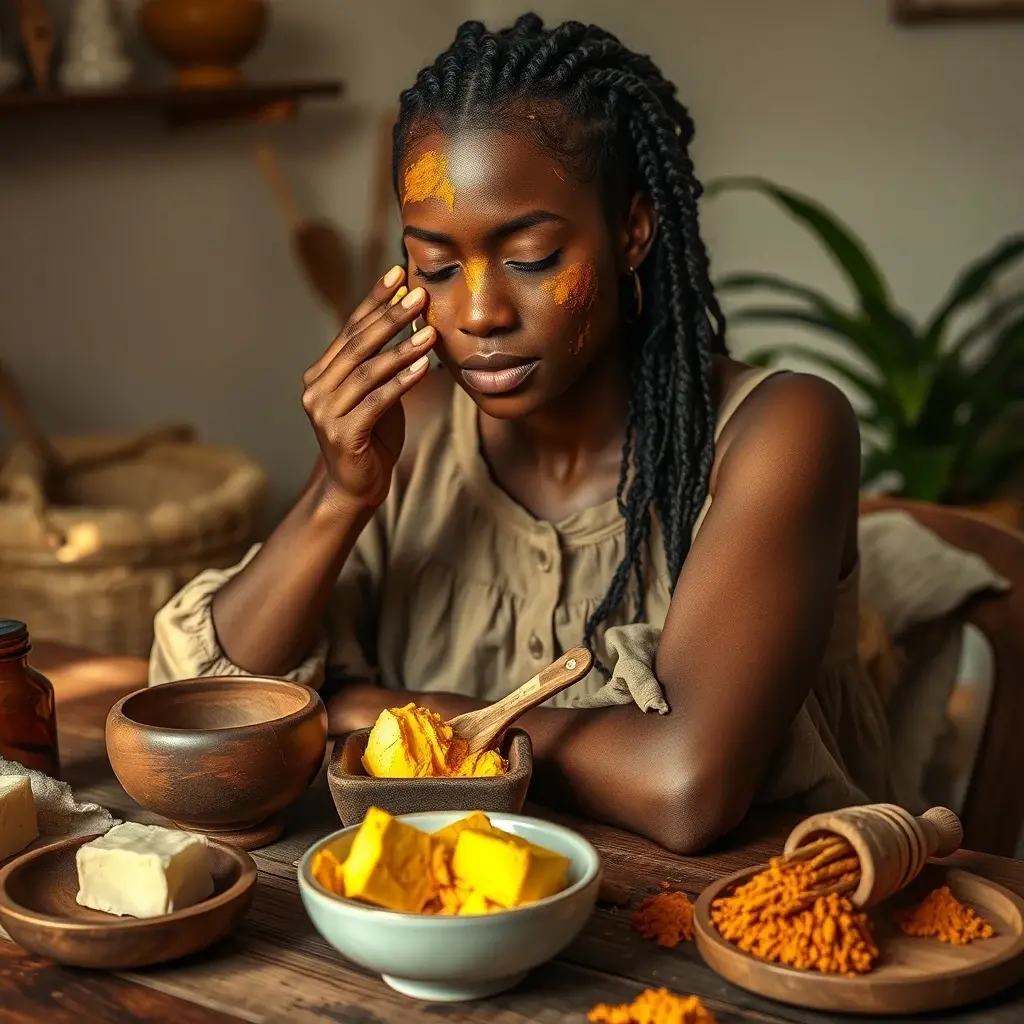
| Turmeric | South Asia | Curcumin inhibits melanin synthesis, reducing hyperpigmentation (Phytotherapy Research, 2020). | Used in haldi ceremonies for brides in India and Pakistan. |
| Tamanu Oil | Pacific Islands | Contains calophyllolide, a compound that accelerates wound healing (International Journal of Cosmetic Science, 2019). | Applied to tattoos and scars in Samoa and Tahiti. |
| Black Soap | West Africa | High pH (9–10) balances oily skin; contains plantain skins with antimicrobial properties (Journal of Cosmetic Dermatology, 2018). | Used for acne treatment and postpartum care in Ghana and Nigeria. |
Techniques often emphasize holistic approaches. For example, the Yoruba adire dyeing process in Nigeria includes a pre-treatment where fabric artisans apply a paste of palm kernel oil and camwood to their hands to prevent dye stains—a practice now adapted into modern melanin skincare for its antiseptic properties. Similarly, the Korean hanbang tradition, which dates back to the Goryeo Dynasty (918–1392 CE), combines ginseng and licorice root to brighten skin, a method now incorporated into K-beauty products like Sulwhasoo’s Concentrated Ginseng Renewing Cream.
Quantitative Impact: Market Growth and Consumer Behavior
The global market for melanin-inclusive skincare has expanded rapidly, driven by demographic shifts and digital advocacy. Key data points include:
- Market Valuation: The sector reached $12.4 billion in 2023, with a projected CAGR of 8.2% through 2030 (Euromonitor International).
- Consumer Demographics: A 2023 Mintel report found that 68% of Black consumers in the U.S. prioritize skincare products formulated for melanin-rich skin, up from 45% in 2018.
- Social Media Influence: TikTok videos tagged #AncestralSkincare garnered 1.2 billion views in 2023, with tutorials on DIY turmeric masks and shea butter blends driving engagement.
- Brand Performance: Black-owned brands like Briogeo and Mielle Organics saw revenue growth of 40% and 50%, respectively, in 2022 (NielsenIQ).
However, disparities persist. A 2022 Harvard Business Review analysis revealed that less than 5% of venture capital funding for beauty startups went to Black founders, despite their disproportionate influence on trends. Additionally, a ProPublica investigation found that 60% of shea butter exported from West Africa is processed in Europe or Asia, with local communities receiving minimal profits—a dynamic critics argue mirrors historical exploitation.
Stakeholder Perspectives: Conflicts and Collaborations
The heritage skincare movement involves diverse stakeholders with competing interests. Key voices include:
Cultural Preservationists: “These practices are not trends; they are living traditions passed down through generations,” says Dr. Aisha Beliso-De Jesús, a professor of African American Religions at Harvard Divinity School. “Commercialization risks diluting their spiritual and communal significance.” Beliso-De Jesús advocates for cultural heritage licenses, a legal framework to protect Indigenous knowledge from patenting by multinational corporations.
Dermatologists: “There’s a misconception that natural equals safe,” warns Dr. Jeanine Downie, a New Jersey-based dermatologist and author of Beautiful Skin of Color. “Turmeric can cause irritation, and unrefined shea butter may clog pores. We need more clinical trials to validate these ingredients for melanin-rich skin.” Downie’s research, published in the Journal of the American Academy of Dermatology, found that 30% of patients using traditional remedies experienced adverse reactions due to improper formulations.
Industry Leaders: “The demand for melanin-inclusive products is undeniable, but we must ensure ethical sourcing,” states Lisa Price, founder of Carol’s Daughter, a brand acquired by L’Oréal in 2014. Price’s company partners with shea butter cooperatives in Ghana, ensuring fair wages and sustainable harvesting practices. “It’s about creating a supply chain that uplifts communities, not just profits.”
Activists: “The beauty industry has a long history of profiting from Black and Brown cultures while excluding us from leadership,” argues Nyma Tang, a beauty influencer and founder of The Darkest Shade, a platform advocating for deeper shade inclusivity. Tang’s 2020 petition, which called on brands to expand their foundation ranges, garnered over 500,000 signatures and prompted companies like Fenty Beauty and Estée Lauder to introduce new shades.
Systemic Impacts: Beyond Beauty
The revival of heritage skincare routines extends beyond aesthetics, influencing economic, educational, and political spheres. In Ghana, the Shea Butter Processing and Export Promotion Program, launched in 2018, has trained over 10,000 women in sustainable production techniques, increasing their incomes by an average of 35%. Similarly, India’s National Medicinal Plants Board has funded research into Ayurvedic skincare, leading to the development of Kama Ayurveda, a brand that exports turmeric-based products to over 30 countries.
Academic institutions are also integrating these practices into curricula. The University of the West Indies in Jamaica offers a course on Caribbean Herbal Medicine, which includes modules on melanin care using local ingredients like cerasee and moringa. In the U.S., Howard University’s College of Medicine launched a Melanin and Skin of Color Research Initiative in 2021, focusing on conditions like keloids and post-inflammatory hyperpigmentation that disproportionately affect darker-skinned individuals.
Politically, the movement has intersected with broader conversations about decolonization. In 2022, South Africa’s Cultural, Religious, and Linguistic Communities Commission proposed legislation to protect Indigenous beauty practices from biopiracy, following a case where a French company patented a rooibos-based skincare formula without acknowledging its South African origins. The bill, still under review, would require companies to obtain consent from traditional knowledge holders before commercializing their practices.
The trajectory of heritage skincare routines hinges on unresolved tensions between innovation and preservation. Upcoming regulatory milestones, such as the European Union’s 2024 ban on skin-lightening products containing hydroquinone, may accelerate demand for melanin-affirming alternatives. Meanwhile, grassroots organizations like Sankofa Skincare Collective in the U.S. are developing open-source databases to document ancestral recipes, ensuring they remain accessible to future generations. The balance between honoring tradition and adapting to modern markets will determine whether these practices become a fleeting trend or a lasting shift in global beauty paradigms. As consumers increasingly seek products that reflect their identities, the industry’s ability to navigate these complexities will shape its evolution in the decades to come.
You may also like
-
The Comprehensive Dynamics of Melanin Ritual Skincare: Science, Routines, and Equity for Medium to Dark Skin Tones in 2025
-
The Comprehensive Framework for Melanin-Conscious Skincare: Evidence-Based Strategies for Hyperpigmentation, Brightening, and Barrier Resilience
-
The Global Resurgence of Ancestral Melanin Care: Tradition, Science, and Identity in Contemporary Skincare
-
The Essential Components of Melanin Ritual Skincare: A 2025 Breakdown of Dark Skin Radiance, Formulation Science, and Dermatological Precision for Rich Complexions
-
Sustainable Fashion: How the Industry is Shifting Toward Ethical and Eco-Friendly Practices