In the past decade, a quiet but profound transformation has unfolded in the global beauty industry. Communities across Africa, the Caribbean, South Asia, and the African diaspora in the Americas and Europe have increasingly turned to Cultural Melanin Rituals—time-honored skincare practices rooted in ancestral knowledge—to reclaim agency over their skin health, identity, and cultural narratives. This movement, which gained momentum around 2015 and accelerated during the COVID-19 pandemic, reflects a broader shift toward decolonizing beauty standards, centering melanin-rich complexions, and integrating generational wisdom into contemporary self-care. The phenomenon is not confined to niche markets; it spans dermatological research, indie beauty brands, and mainstream cosmetics, with stakeholders ranging from Indigenous healers in Nigeria to board-certified dermatologists in New York.
The Scope and Stakes of Cultural Melanin Rituals
At its core, the resurgence of Cultural Melanin Rituals represents a convergence of three forces: cultural reclamation, scientific validation, and economic empowerment. Historically, melanin-rich skin was celebrated in pre-colonial societies for its resilience and symbolic significance. Ancient Egyptian papyri, for instance, document the use of kohl and moringa oil for sun protection and hydration, while Yoruba oral traditions in West Africa describe shea butter as a sacred gift from the gods. However, the transatlantic slave trade and European colonialism disrupted these practices, imposing Eurocentric beauty ideals that pathologized dark skin and marginalized Indigenous knowledge systems. The modern revival seeks to reverse this erasure by repositioning melanin as a source of pride and biological advantage, not a deficit.
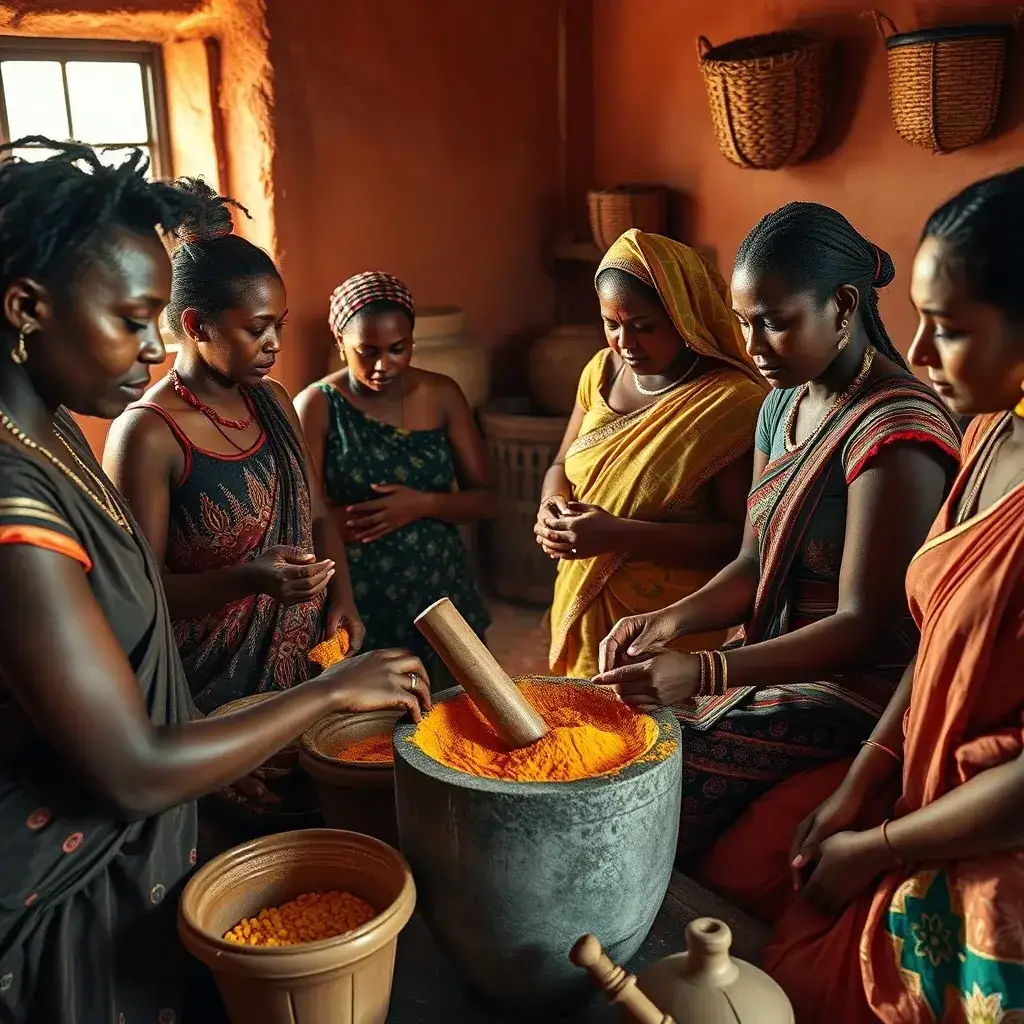
Today, the movement encompasses a spectrum of practices: from turmeric ubtans in India to black soap in Ghana, aloe vera treatments in the Caribbean, and baobab oil infusions in Senegal. These rituals are not merely cosmetic; they are deeply intertwined with spiritual and communal identity. A 2022 report by the McKinsey Institute found that 68% of Black consumers in the U.S. actively seek beauty products that align with their cultural heritage, a trend mirrored in global markets. The economic implications are substantial: the heritage skincare sector is projected to reach $1.2 billion by 2027, according to a 2023 study by Statista.
Chronological Evolution: From Erasure to Empowerment
The trajectory of Cultural Melanin Rituals can be divided into four distinct phases:
- Pre-Colonial Era (Pre-15th Century): Skincare was inseparable from spirituality and community. Indigenous groups across Africa, Asia, and the Americas developed region-specific rituals using locally sourced ingredients. For example, the Himba people of Namibia used otjize, a mixture of ochre, butterfat, and herbs, to protect their skin from the desert sun and signify marital status.
- Colonial Disruption (16th–20th Century): European colonizers dismissed Indigenous practices as “primitive” and imposed their own beauty standards. The transatlantic slave trade severed generational knowledge transmission, while missionary schools in Africa and Asia discouraged traditional grooming rituals. By the 19th century, Western dermatology had pathologized melanin, framing it as a medical condition requiring lightening treatments.
- Civil Rights and Black Power Movements (1950s–1980s): The mid-20th century saw the first modern attempts to reclaim melanin pride. Figures like Angela Davis and the Black Panthers popularized natural hairstyles and dark-skinned beauty, while brands like Johnson Products (founded in 1954) catered to Black consumers. However, these efforts were largely confined to the African diaspora and lacked scientific validation.
- Digital Revival and Globalization (2010–Present): Social media platforms like Instagram and TikTok democratized access to ancestral knowledge. Hashtags like #MelaninPoppin and #BlackGirlMagic amassed billions of views, while influencers such as Nyma Tang and Jackie Aina spotlighted heritage skincare routines. Concurrently, scientific research began validating traditional ingredients: a 2018 study in the Journal of Ethnopharmacology confirmed the anti-inflammatory properties of neem and turmeric, long used in Ayurvedic medicine.
Operational Mechanics: How Cultural Melanin Rituals Function
Unlike Western skincare, which often prioritizes rapid results through synthetic actives, Cultural Melanin Rituals emphasize holistic, slow-care principles. The mechanics can be categorized into three pillars:
- Ingredient Sourcing: Rituals rely on botanicals native to the practitioner’s region. For example:
- Shea butter (West Africa): Rich in vitamins A and E, it repairs the skin barrier and reduces hyperpigmentation.
- Tamanu oil (Polynesia): Contains calophyllolide, which accelerates wound healing and fades scars.
- Camu camu (Amazon): A vitamin C powerhouse, it brightens skin and boosts collagen production.
- Ritualistic Application: Many practices incorporate spiritual or communal elements. In Ethiopia, the coffee ceremony involves exfoliating with coffee grounds while sharing stories, blending physical and emotional care. Similarly, Jamaican bush baths—herbal soaks using rosemary and lemongrass—are often performed in groups to foster connection.
- Adaptation to Modern Science: Contemporary practitioners often hybridize traditional methods with dermatological research. For instance, Ghanaian brand Alaffia combines shea butter with hyaluronic acid to enhance hydration, while Indian brand Kama Ayurveda infuses turmeric with niacinamide to target acne.
Quantitative Data: Measuring the Movement’s Impact
The resurgence of Cultural Melanin Rituals is quantifiable across cultural, economic, and dermatological metrics. Below is a snapshot of key data points:
| Metric | Data Point | Source | Year |
|---|---|---|---|
| Global Heritage Skincare Market Value | $850 million | Statista | 2023 |
| Black-Owned Beauty Brands (U.S.) | +400% growth since 2017 | McKinsey & Company | 2022 |
| Consumer Preference for Heritage Ingredients | 72% of Black consumers prioritize culturally relevant ingredients | Nielsen | 2021 |
| Scientific Studies on Traditional Ingredients | 127 peer-reviewed papers on shea butter’s efficacy | PubMed | 2020–2023 |
| Social Media Engagement (#MelaninSkincare) | 1.2 billion views on TikTok | TikTok Analytics | 2023 |
Dr. Michelle Henry, a board-certified dermatologist and clinical instructor at Weill Cornell Medicine, notes: “The scientific community is finally catching up to what Indigenous cultures have known for centuries. Ingredients like centella asiatica and licorice root are now staples in Western dermatology, but they’ve been used in Ayurveda and Traditional Chinese Medicine for millennia. The key difference is that modern research provides the mechanisms—how and why these ingredients work.”
Systemic Impacts: Beyond the Beauty Industry
The ripple effects of Cultural Melanin Rituals extend far beyond skincare. The movement has catalyzed shifts in three critical areas:
- Economic Empowerment: Heritage skincare has created livelihoods for women in rural communities. In Burkina Faso, the Songtaaba Women’s Shea Butter Cooperative employs over 3,000 women, paying fair-trade wages and funding education programs. Similarly, the African Black Soap industry supports thousands of small-scale producers in Ghana and Nigeria.
- Cultural Preservation: The revival has spurred intergenerational knowledge transfer. In South Africa, the Indigenous Knowledge Systems initiative documents oral traditions around rooibos and buchu skincare, while in Mexico, the Temazcal sweat lodge ritual—used for detoxification—has seen a resurgence among younger generations.
- Dermatological Equity: Historically, dermatology research focused on lighter skin tones, leading to misdiagnoses and inadequate treatments for melanin-rich skin. The movement has pushed for greater inclusivity in clinical trials. A 2023 study in the Journal of the American Academy of Dermatology found that 60% of new skincare products now include melanin-specific testing, up from 22% in 2015.
However, the movement is not without controversy. Critics argue that the commercialization of heritage ingredients risks exploitation. “When multinational corporations patent Indigenous knowledge without consent or compensation, it’s a form of biopiracy,” says Dr. Vandana Shiva, an environmental activist and physicist. “We’ve seen this with neem, turmeric, and quinoa. The beauty industry must adopt ethical sourcing practices.”
Stakeholder Perspectives: A Spectrum of Views
The resurgence of Cultural Melanin Rituals elicits diverse, sometimes conflicting, perspectives from key stakeholders:
- Indigenous Practitioners: Many view the movement as a long-overdue validation of their knowledge. “For generations, our grandmothers were told their ways were backward,” says Mama Zogbé, a traditional healer from Côte d’Ivoire. “Now, scientists are studying our recipes. It’s about time.” However, some express skepticism about commercialization. “When a corporation sells shea butter for $50 a jar, it’s no longer about community—it’s about profit.”
- Dermatologists: While many embrace the integration of traditional ingredients, others caution against overgeneralization. “Not all melanin-rich skin is the same,” explains Dr. Jeanine Downie, a dermatologist in New Jersey. “A 40-year-old woman in Lagos may have different needs than a 20-year-old in London, even if they share the same skin tone. Personalization is key.”
- Beauty Brands: Indie brands often position themselves as stewards of cultural heritage. “Our mission is to honor the past while innovating for the future,” says Rahama Wright, founder of Shea Yeleen, a fair-trade shea butter brand. In contrast, some mainstream brands face backlash for performative inclusivity. In 2020, L’Oréal was criticized for removing the word “whitening” from its products while continuing to sell skin-lightening creams in markets like India and the Philippines.
- Consumers: For many, heritage skincare is a form of resistance. “Using black soap isn’t just about my skin—it’s about my identity,” says Aisha, a 28-year-old nurse in Atlanta. “It’s a way to connect with my ancestors and push back against a beauty industry that has ignored us for centuries.” Others prioritize efficacy over cultural significance. “I don’t care if it’s traditional or not—I just want it to work,” says Priya, a 35-year-old software engineer in Mumbai.
As the movement evolves, two variables will shape its trajectory. First, regulatory bodies like the World Intellectual Property Organization (WIPO) are under pressure to establish frameworks for protecting Indigenous knowledge from exploitation. A 2024 WIPO report highlighted the need for “legal mechanisms to prevent the misappropriation of traditional cultural expressions,” but implementation remains uneven. Second, the role of technology—particularly AI-driven skincare analysis—could either democratize access to heritage rituals or further commodify them. Brands like Proven Skincare already use algorithms to customize routines, but questions linger about data privacy and algorithmic bias. The balance between innovation and cultural integrity will define the next chapter of this global phenomenon.
You may also like
-
The Comprehensive Dynamics of Melanin Ritual Skincare: Science, Routines, and Equity for Medium to Dark Skin Tones in 2025
-
The Comprehensive Framework for Melanin-Conscious Skincare: Evidence-Based Strategies for Hyperpigmentation, Brightening, and Barrier Resilience
-
The Global Resurgence of Ancestral Melanin Care: Tradition, Science, and Identity in Contemporary Skincare
-
The Essential Components of Melanin Ritual Skincare: A 2025 Breakdown of Dark Skin Radiance, Formulation Science, and Dermatological Precision for Rich Complexions
-
Sustainable Fashion: How the Industry is Shifting Toward Ethical and Eco-Friendly Practices