
The modern ritual of personal adornment rarely begins without a pilgrimage to the beauty supply. This is not a casual errand. It is a deliberate excavation. Shelves groan under the weight of innumerable vials, pots, and aerosols, each promising a subtle metamorphosis. One finds the quotidian alongside the esoteric. Shampoos for volumetric augmentation sit next to ionic hairbrushes boasting tourmaline-infused bristles. The beauty supply functions as a library of potential selves.
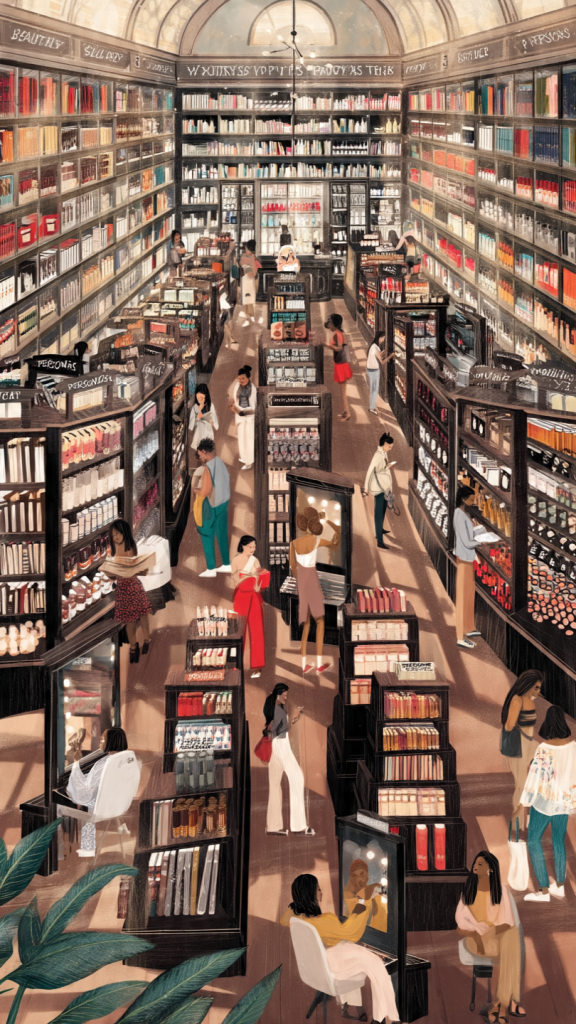
Navigating this terrain demands a certain literacy. An uninitiated consumer might gravitate toward the familiar—the white bottles, the blue gels, the logos burned into memory by decades of television. But the seasoned habitué knows to look deeper. They inspect the inci list for phenoxyethanol limits or the concentration of niacinamide. A superior beauty supply cultivates this discernment. It does not pander to the lowest common denominator. Instead, it elevates.
Texture is the silent language of the industry. Run a finger across a jar of ceramide cream. Feel the occlusion. Does it break into a watery slip or a buttery balm? The beauty supply experience is fundamentally haptic. Online algorithms cannot replicate the viscosity check. They cannot convey the drag of a pigment swatch or the snap of a crimped hair clip. Physical retail survives because of this irreducible tactility. People crave the assurance of their own epidermis.
Consider the olfactory assault. A poorly ventilated beauty supply reeks of artificial strawberry and cheap musk. It is nauseating. A refined establishment, however, layers its aromas deliberately. The haircare quadrant smells of cool mint and hydrolyzed keratin. The skincare zone whispers of neroli and fermented yeast. This is psychosomatic engineering. Scent primes the buyer for specific promises: clean, clinical, or comforting. The beauty supply that ignores this does so at its own peril.
Logistics form the unglamorous backbone. A single beauty supply warehouse must reconcile conflicting storage requirements. Retinol degrades in heat. Vitamin C oxidizes in light. Aerosol cans cannot be stacked near radiators. Glass dropper bottles require honeycomb dividers. The precision is monastic. One error—a pallet left in an alley for three hours—can render an entire shipment of probiotics inert. The consumer never sees this. They only feel the absence of efficacy.
The counterfeit crisis has reached epidemic proportions. Online marketplaces teem with facsimiles. A bottle labeled as La Mer may contain nothing more than mineral oil and a whisper of lentil extract. The legitimate beauty supply fights back with holographic seals, tamper-evident shrink bands, and batch code verification. Some have adopted blockchain ledgers. Scan a QR code with your mobile device, and the entire provenance—from the German emulsifier to the Swiss bottling line—appears. Trust is no longer assumed. It must be demonstrated.
Hair texture politics have reshaped the industry. For decades, the beauty supply ignored the coiled and the kinky. Shelves prioritized straightening emulsions and flat irons. The natural hair movement dismantled that hegemony. Now, one finds curl memory gels, edge tamer waxes, and saturating deep conditioners for low-porosity strands. This is not charity. It is commerce responding to a long-ignored demographic. The inclusive beauty supply thrives. The exclusive one starves.
Professional licenses create a bifurcated market. Some beauty supply stores are open to all. Others—the pro-only establishments—guard their thresholds. You must present a cosmetology license or an esthetician certification. This is frustrating for the layperson. Yet, it preserves access to high-concentration acids and salon-grade developers. A 30% glycolic peel is not a toy. The beauty supply that sells it to an untrained hand invites litigation. Therefore, the velvet rope remains.
Sustainability presents a wicked contradiction. The beauty supply industry is drenched in plastic. Single-use sachets, polypropylene tubs, and blister packs abound. Progressive retailers now offer refill stations. Imagine walking in with a clean mason jar and filling it with conditioner dispensed from a stainless steel drum. The waste reduction is enormous. Yet, the capital expense is daunting. Small beauty supply shops lack the margin to install bulk dispensers. A patchwork of innovation and inertia persists.
The rise of “skin streaming” has simplified the shopping list. Previously, customers sought ten-step routines: toner, essence, serum, ampoule, moisturizer, eye cream, sleeping pack. The contemporary beauty supply customer is exhausted. They want a multitasking sunscreen. They want a cleanser that also exfoliates. They want a balm that replaces three separate jars. This minimalism is not laziness. It is an informed rejection of conspicuous consumption. The beauty supply must curate for efficiency, not excess.
Tools warrant their own taxonomy. A professional beauty supply will stock twenty different tweezers. Slant-tip, point-tip, round-handle, spring-loaded. Each serves a specific dermis. The same applies to brushes. A foundation brush should be dense and synthetic—oil-resistant and easy to sanitize. A powder brush should be fluffy and natural-haired, capable of diffusing pigment without streaks. Cheap tools shed bristles into your product. Expensive tools become heirlooms. The beauty supply arbitrates this hierarchy.
Color matching has gone digital. Many beauty supply chains now feature spectrophotometers. These handheld devices scan your jawline and produce an exact foundation formula—right down to the undertone (cool, neutral, warm, olive). The algorithm then cross-references its inventory. No more guessing between “sand” and “beige.” The machine knows. For the customer with vitiligo or post-inflammatory hyperpigmentation, this accuracy is not a luxury. It is a necessity.
The grey market thrives on diversion. This occurs when products meant for salons (large, economical sizes) are secretly sold to unauthorized discounters. A beauty supply that engages in diversion saves a few dollars on procurement but destroys its relationship with professional brands. Manufacturers blacklist diverters. The supply dries up. Then the beauty supply must fill its shelves with unknown, lower-quality alternatives. The cycle of self-sabotage is complete.
Education is the ultimate competitive moat. A beauty supply cannot merely sell. It must teach. Why should a customer use an oil cleanser before a water-based cleanser? Because oil dissolves oil. Why does a vitamin C serum tingle? Because its low pH is temporarily adjusting the stratum corneum. Staff who can answer these questions earn loyalty. Staff who shrug create churn. The investment in training—weekly quizzes, live demonstrations, vendor certifications—pays exponential dividends.
The emotional labor of the beauty supply employee is rarely acknowledged. They have held the hand of a chemotherapy patient seeking a gentle scalp wash. They have consoled a teenager whose cystic acne drew cruel laughter at school. They have advised a burn survivor on silicone scar gels. These interactions are not transactions. They are small acts of grace. A beauty supply that recognizes this humanity fosters a culture of compassion. One that does not becomes a hollow shell.
Merchandising psychology dictates shelf placement. Eye level is prime real estate. This is where high-margin “impulse” items live: lip oils, hand creams, sheet masks. Lower shelves hold the bulky, the mundane, the low-profit. The beauty supply designer arranges these sight lines like a museum curator. They want the shopper to meander, to touch, to compare. Aisle width matters. Too narrow, and customers clip shoulders. Too wide, and intimacy evaporates. The golden ratio is about four feet.
Seasonality introduces chaos. Summer beauty supply inventories emphasize sunscreens with high PA ratings, water-resistant mascaras, and mattifying powders. Winter shifts toward occlusive balms, humidifiers, and cuticle oils. Holiday releases—limited-edition eyeshadow palettes, advent calendars—create artificial scarcity. Customers queue before dawn. The beauty supply that fails to forecast these swings loses revenue and alienates loyalists. Data analytics help. Gut instinct alone is reckless.
The future whispers of bioprinting. Imagine a beauty supply kiosk that prints a biodegradable sheet mask infused with your own biomarkers—a swab of your cheek determines your antioxidant needs. Or a lipstick extruded from a cartridge of carmine-free pigments, mixed on the spot to your desired opacity. These technologies exist in laboratories. Commercial scaling remains elusive. But the direction is clear: away from mass production and toward the bespoke. The beauty supply of 2035 will know your name and your lipid profile.
Accessibility is an unfinished conversation. A beauty supply store should be navigable by wheelchair. Product labels should include Braille or large-print options. Testers should be reachable without stretching. Many stores fail these benchmarks. The result is exclusion by design. Some retailers have begun hosting “sensory-friendly hours”—dimmed lights, no music, no strong fragrance—for autistic shoppers. This is progress. But it is not yet universal.
The online versus offline tension will never fully resolve. E-commerce beauty supply offers convenience, price comparisons, and user reviews. Brick-and-mortar offers texture, smell, and immediate gratification. The hybrid model—buy online, pick up in-store within two hours—attempts to reconcile opposites. Some chains now offer “endless aisle” kiosks. If a product is not on the shelf, the customer taps a screen, and it ships to their home for free. The beauty supply becomes a portal, not a warehouse.
Regulatory changes approach like a slow tide. The Modernization of Cosmetics Regulation Act (MoCRA) in the United States has introduced mandatory facility registration and adverse event reporting. A responsible beauty supply welcomes this. It separates the serious from the fly-by-night. However, compliance costs are non-trivial. Small beauty supply owners complain of paperwork burdens. The counterargument is simple: if you cannot prove your products are safe, you should not sell them.
Let us end where we began. The beauty supply is not a commodity. It is a covenant. A promise whispered between the manufacturer, the retailer, and the person staring into their bathroom mirror. That promise says: You are worth the effort. You are allowed to change. You may become someone new before lunch. The bottles, the brushes, the balms—these are merely conduits. The true product is hope. And as long as humans remain self-critical, hopeful, and embodied, the beauty supply will endure.
You may also like
-
The Comprehensive Dynamics of Melanin Ritual Skincare: Science, Routines, and Equity for Medium to Dark Skin Tones in 2025
-
The Comprehensive Framework for Melanin-Conscious Skincare: Evidence-Based Strategies for Hyperpigmentation, Brightening, and Barrier Resilience
-
The Global Resurgence of Ancestral Melanin Care: Tradition, Science, and Identity in Contemporary Skincare
-
The Essential Components of Melanin Ritual Skincare: A 2025 Breakdown of Dark Skin Radiance, Formulation Science, and Dermatological Precision for Rich Complexions
-
Sustainable Fashion: How the Industry is Shifting Toward Ethical and Eco-Friendly Practices